
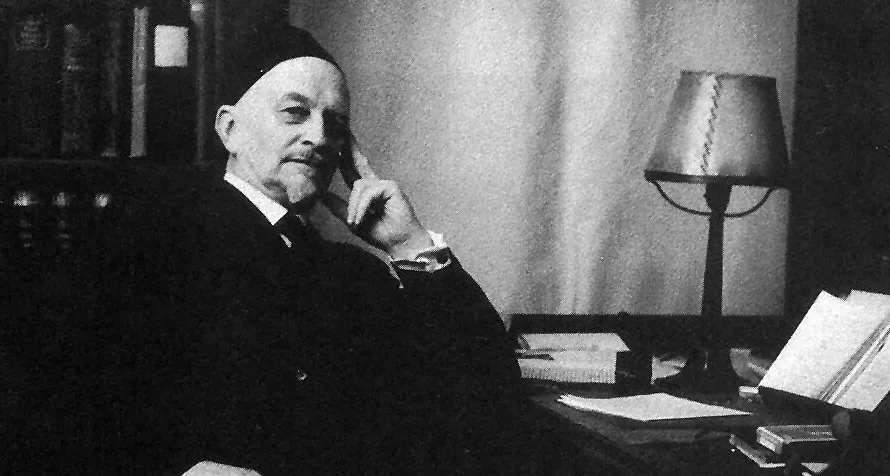
In 2026 it will be one hundred years since Ivan Ilyin’s work “The Motherland and Us.” Written soon after the philosopher’s expulsion from Soviet Russia, it became one of the key works in his legacy and shaped many of the ideas he developed over the following decades.
Today Ilyin’s name is once again in the spotlight: Vladimir Putin has repeatedly referred to his works and quoted them in his speeches, giving grounds to call him all but the favorite philosopher of the current president of Russia.
Journalists’ attention today is fixed mainly on the special military operation and on social problems, yet we are convinced that we can understand ourselves only by reading those who lived and breathed Russia every second and who, in modeling the future, thought in terms of her destiny.
As did this brilliant intellectual, one of the creators of our national idea, a friend of Ivan Shmelyov and Sergei Rachmaninoff, whose works on Hegel earned the praise of Heidegger and Barth.
Let us try together to understand how, in a world of émigré loneliness and pain for a lost homeland, great meanings for Russia were born — and what this religious philosopher gave to Russia and to Europe.
To put the background briefly: Ivan Ilyin, a professor at Moscow University — a subtle connoisseur of the currents of European philosophy, whose father was a godson of the emperor and whose name was entered in the noble genealogical register of Moscow Province — was expelled from Russia in 1922 aboard the famous “philosophers’ ship,” in the period of the first wave of emigration.
He and his wife settled in Berlin.
The period from 1922 to 1926 became for Ivan Ilyin a time of shattering rupture, of agonizing adaptation — and, at the same time, of his ascent as one of the most powerful intellectual voices of the Russian emigration.
His letters of those years are shot through with a terrible longing: he confessed that in emigration he felt like a “living corpse,” and that his soul had remained there, beyond the line.
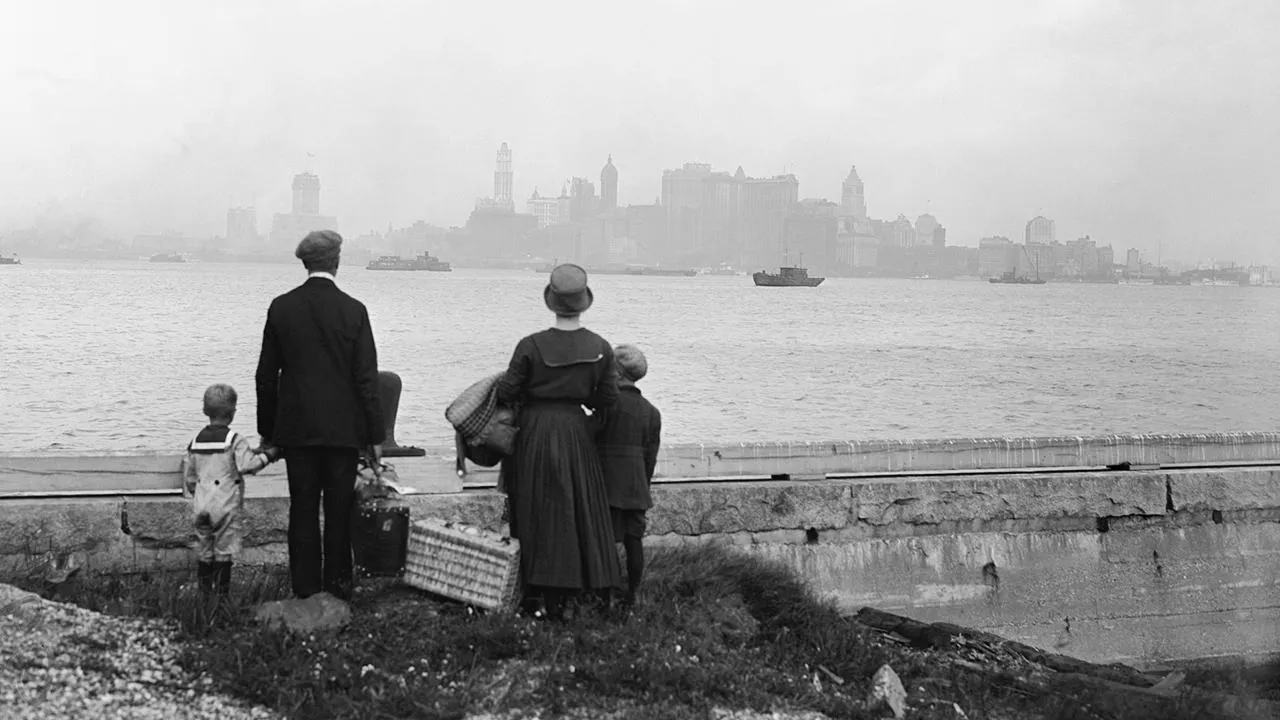
In those four years he went from a bewildered exile without a penny to his name to the recognized leader of the right wing of the Russian diaspora and one of the chief intellectual leaders and ideologists of the White movement.
It was then that his work “The Motherland and Us” saw the light. In it he formulated a spiritual and political program of action for the Russian emigration, founded on the idea of faithfulness to historical Russia, and set out the basic tenets of the Orthodox Russian person who cannot conceive of himself apart from his Fatherland.
WHERE DOES THE MOTHERLAND BEGIN?
What was in this work, which instantly spread through the circles of the Russian emigration? Ivan Alexandrovich called on the émigrés to turn their homesickness into a spiritual feat, insisting that a rupture with the Motherland was impossible, and stressing that Russia’s future depended on spiritual values, not merely on the current regime.
The “Motherland” is not simply a territory or a body of citizens. It is a living spiritual reality, a shared national culture and faith, which a person must carry in his heart.
Proceeding from this understanding, Ivan Ilyin set out the following theses in his work:
-
the emigration must not lose its bond with Russia;
-
the defeat of the White movement does not mean the defeat of Russian culture;
-
spiritual rebirth matters more than political revenge;
-
the new Russia must be built on legal consciousness and responsibility.
This brochure laid the foundation for his subsequent large-scale political works.
He understood that the White movement had lost the war on the battlefield, but was bound to win it on the field of ideas.
The White emigration, in Ilyin’s view, was not simply to “wait” for the fall of Soviet power. Its task was to preserve Russia’s authentic spiritual heritage, to purify its own consciousness, and to prepare the cadres for the future national rebirth.
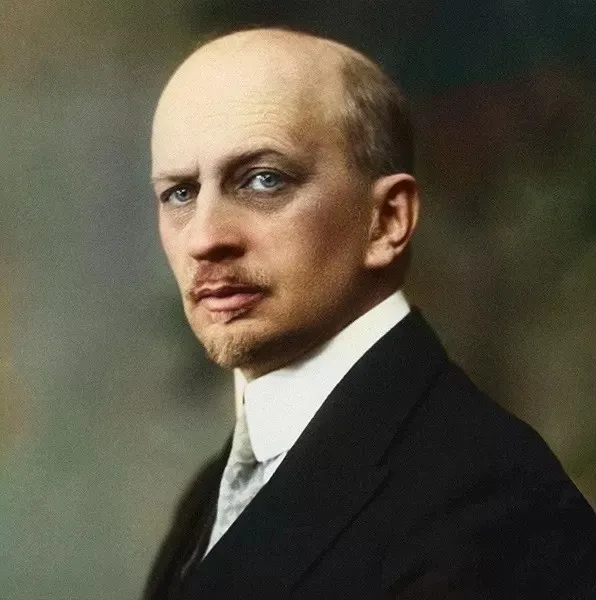
The author calls for renouncing the idea of a mechanical restoration of the past or of blind revenge. The new Russia must be built on religious renewal, a qualitative selection of people, and strong state power.
It was in these years that Ilyin grew close to the head of the Russian All-Military Union (ROVS), General Wrangel. Ilyin became his personal friend, adviser, and chief ideologist. From armchair academic philosophy Ilyin moved to hard-edged, passionate political writing.
From 1926 onward Ilyin developed a colossal educational and political activity across Europe. With his brilliant command of foreign languages, he began a cycle of public lectures (by 1938 there would be about 200 of them) in Germany, Switzerland, Latvia, Czechoslovakia, and Austria.
ONE-MAN RULE, OR HOW TO SET RUSSIA IN ORDER
If “The Motherland and Us” dealt with how we were to survive while preserving ourselves for Russia, his subsequent political writing was devoted to how Russia should be set in order. What is right for her, what is productive for her leadership, what is dear to her people?
Ilyin believed that a state is strong only when it has a single center of will. He sharply criticized parliamentary forms of government, considering them incapable of making rapid decisions in times of crisis, since they dilute responsibility and paralyze the machinery of state at critical moments.
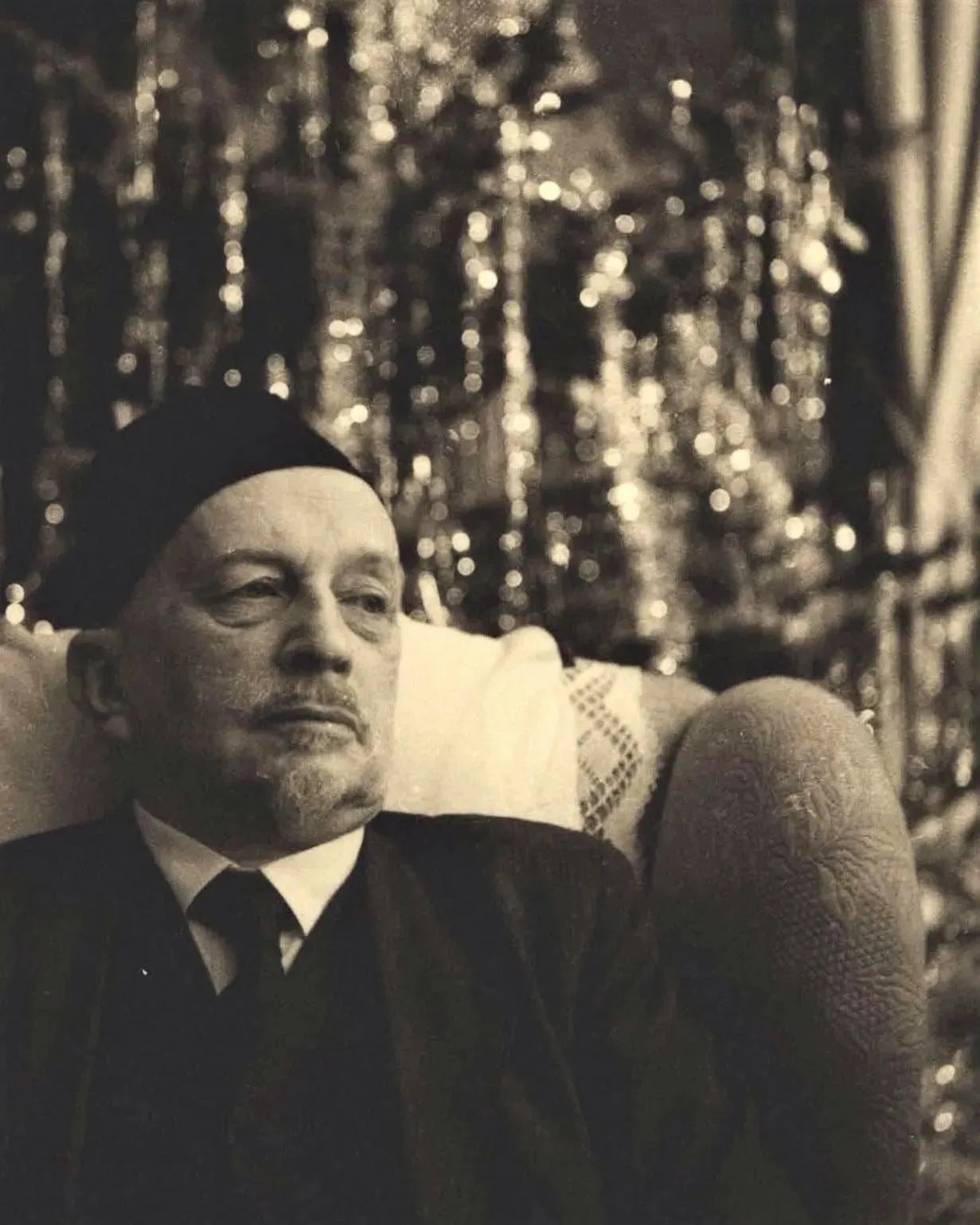
Power must be concentrated in the hands of one person not for the sake of his personal benefit or of despotism, but for the sake of absolute responsibility. The sovereign, supreme ruler, or dictator (Ilyin allowed the necessity of a temporary national dictatorship to save the country) must make decisions alone — and alone answers for them before God and history. If responsibility is divided among ten, no one bears it.
In Ilyin’s view, collegial government almost inevitably breeds a struggle of group and party interests. Instead of service to the common good there begins a competition of parties, factions, and political circles, each striving to secure advantages above all for itself. Under such conditions, the philosopher held, state decisions become the product of backroom compromises and mutual concessions rather than of consistent service to the national interest.
And when multi-party struggle and the rivalry of elites fragment the national will, state power ceases to express the interest of the nation as a whole.
These views took shape under the powerful influence of the experience of the revolution of 1917 and the defeat of the White movement. Ilyin was convinced that it was precisely the weakness of state power that had become one of the causes of the collapse of the Russian Empire.
For Ilyin the army was not merely a military force but the highest manifestation of the spirit of the state. It was on the example of the army that he demonstrated the sacredness of unity of command. In his addresses to the White officer corps he insisted:
A commander’s order must be sacred to the subordinate. Discussion, criticism, or voting on orders (as happened in 1917 during the collapse of the tsarist army) is death for the state.
Unity of command in the army rests not on fear of punishment but on mutual respect and faith. The subordinate must believe in the authority, wisdom, and honesty of his commander, and the commander must see in the soldier a living soul and a brother in arms.
In a broader philosophical sense (later reflected in his writings “On Monarchy and Republic”), Ilyin derived unity of command from the monarchical legal consciousness, which seeks spiritual unity, authority, and a living embodiment of the state in a single person.
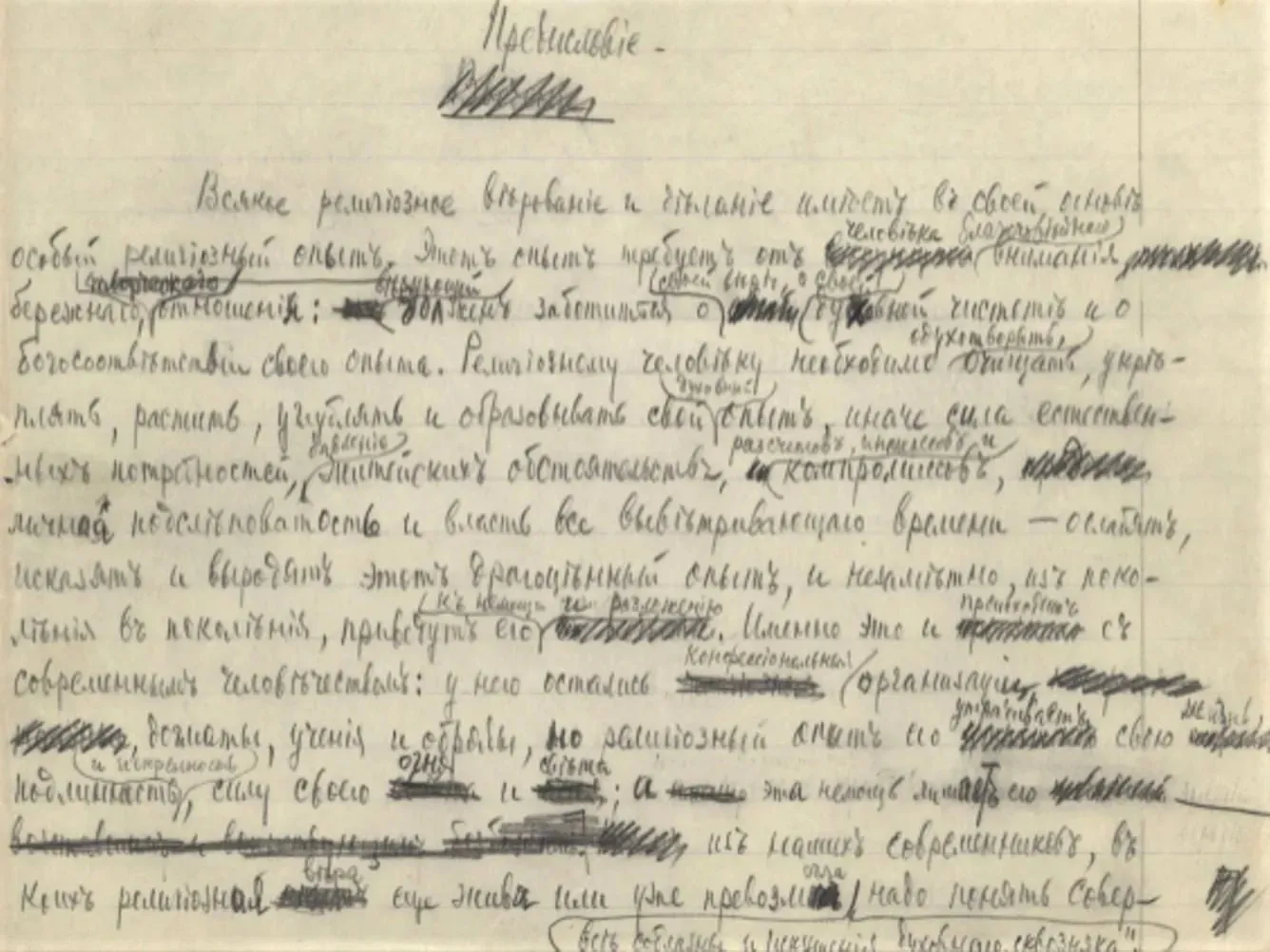
Ilyin maintained that for Russia — with her vast spaces and multinational makeup — republican “rule of the many” was ruinous and led to anarchy. The salvation and strength of the country, in his view, had always lain in strong, centralized one-man rule, guided by Christian morality and love for the Motherland.
THE LATE ILYIN AND HIS TESTAMENT
Many of Ilyin’s ideas continued to be discussed in émigré circles and once again became a subject of public interest in post-Soviet Russia. It was the ideas of a strong state, of the personal responsibility of supreme power, of the priority of national unity over party struggle, and of the special role of spiritual values that made Ilyin’s legacy sought after in contemporary Russian political thought.
In the late 1990s and early 2000s, when Vladimir Putin was saving Russia from the chaos of the Yeltsin years, Ivan Ilyin’s ideas proved prophetic. For this reason the President subsequently turned repeatedly to the philosopher’s works and quoted them publicly.
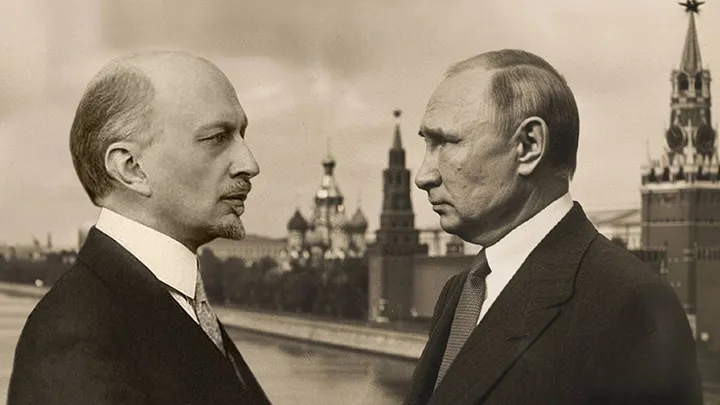
One can only marvel at how such challenges could be foreseen by a man who lived so far from his Motherland.
Ivan Alexandrovich spent the last sixteen years of his life in Switzerland — in Zollikon, a quiet suburb of Zurich.
It was here that Ilyin accomplished his chief feat as a writer, creating the messages which, taken together, may be called his testament and his principal address to Russia.
“If my books are needed by Russia, the Lord will preserve them from destruction; and if they are needed neither by God nor by Russia, then they are of no need to me either.”
Many call this statement his “spiritual testament.” It expresses the thought that the fate of his legacy was to be decided not by the author himself, but by time and by God’s providence.
Ivan Ilyin died in Zollikon on December 21, 1954. His last words, addressed to his wife, were words of gratitude for helping him complete his earthly labor.
The philosopher was absolutely certain that his books would return to their homeland. In one of the last essays of “Our Tasks” he wrote a phrase that proved prophetic:
“My books are written for the Russian people; and to them they will find their way.”
Half a century later, so it came to pass. In 2005, on the initiative of Vladimir Putin, the remains of Ivan Ilyin and of his faithful wife Natalia were solemnly transferred from Switzerland to Moscow and reinterred in the necropolis of the Donskoy Monastery — the place where the philosopher had so dreamed of resting while he was alive.
In the twenty-first century interest in his legacy has grown considerably: the philosopher’s works are being republished, are actively discussed by scholars, and are frequently quoted by Russian statesmen. This makes Ilyin one of the most influential and at the same time most prophetic figures of Russian political thought of the twentieth century.