

The words calling Peter I the creator of a new Russia belong to Voltaire. And in our previous historical publications we have explained why Russia’s history cannot be understood without a knowledge of its past.
Just as the history of the Russian diaspora became an inseparable part of the history of the European continent, so the last three hundred years of Russian history have passed, in large measure, under the sign of Peter I.
His reforms set the direction of Russia’s development for centuries. And the story of how the elites subsequently distorted his designs and led the country back into cycles of old mistakes can serve as a lesson for the present day as well.
There is a common conviction among historians that the past cannot cope with the consequences of the mistaken actions of its elites. The thought can be continued thus: an audit of past mistakes is needed if only because it makes it possible to eliminate them in today’s history.
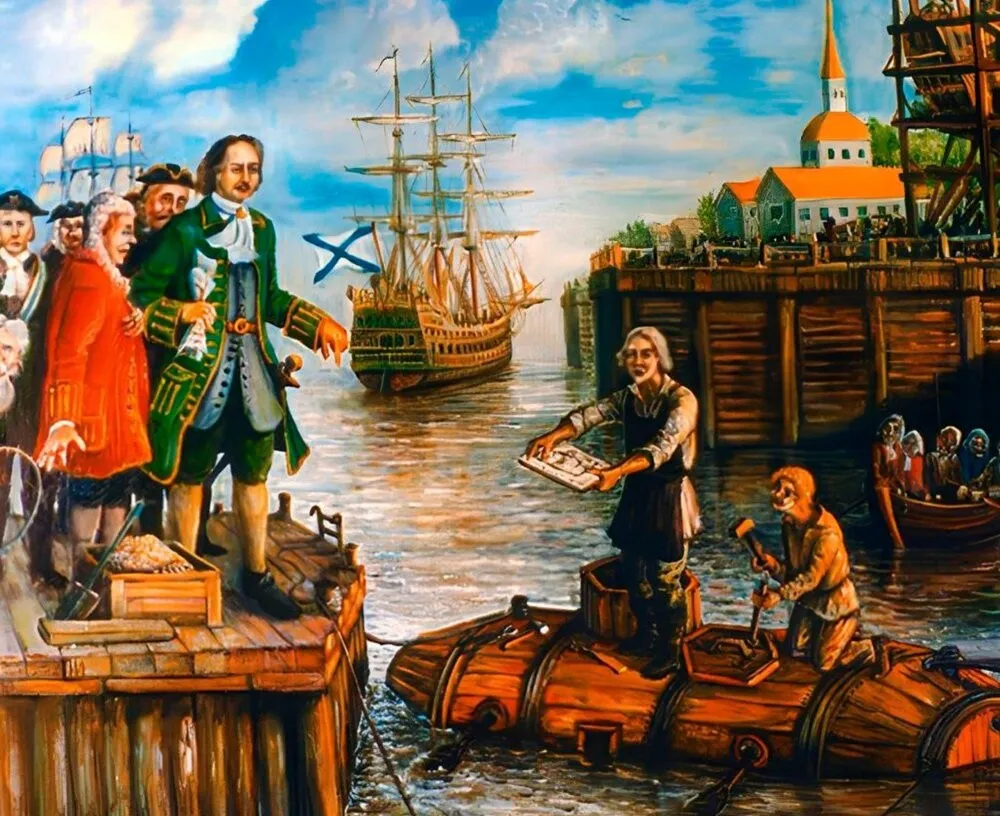
Peter opened that very “window onto Europe” (securing for Russia a permanent outlet to the Baltic), substantially widening its trading and diplomatic possibilities. He modernized the machinery of state, built St Petersburg and created the Academy of Sciences.
But together with the epochal reforms there appeared a new “estate” of men who knew how to use the state as a source of personal enrichment. The officialdom often failed to match the reformer’s design.
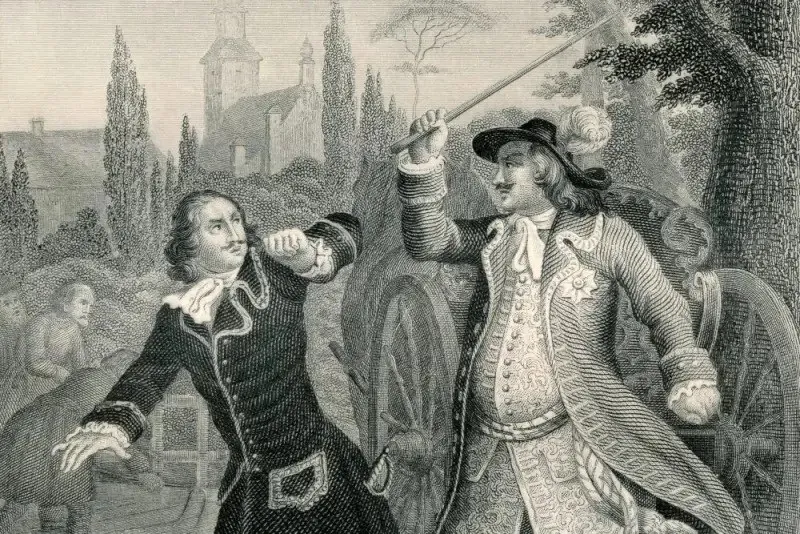
The peculiarity of the Petrine modernization was that the state learned to build a fleet, factories and academies faster than it learned to fight those who turned these great projects into a source of private gain. The textbook example is the case of Alexander Menshikov. Peter’s closest companion became one of the richest men in Europe, and after the tsar’s death he was accused of enormous abuses.
There were others. The head of the Preobrazhensky Prikaz, the organ of political investigation, Fyodor Romodanovsky, became an example of the repressive side of the reforms, and Pyotr Tolstoy (head of the Secret Chancellery) the embodiment of harsh political centralization. Alexei Kurbatov, having created a monopoly on the sale of special stamped paper, made active profit on purchases for the army and navy, and on supplies of materials for the St Petersburg then under construction, inflating prices and pocketing the difference through front men.
Peter the Great once said sadly: “If I am left with a single honest man, even that will be enough.”
This legendary phrase conveys the chief problem of the Petrine age: the state was trying to modernize itself faster than the culture of governance changed. Peter made efforts to cleanse the apparatus. Under him, investigations of the highest dignitaries went forward; in 1714 a special decree against bribery was issued; Menshikov was under investigation for years; and Pyotr Shafirov was even sentenced to death, later commuted to exile.
Peter prosecuted embezzlement with extreme severity. The paradox lay elsewhere: repressions against individual corrupt officials did not remove the very capacity of a rapidly growing state apparatus to reproduce abuses.
If in secular affairs the responsibility for Peter’s public image and the results of his reforms lay largely with statesmen, in the sphere of the Church the co-authors of this period were church hierarchs.
Perhaps one of the most disputed subjects of the Petrine age remains the church reform. And one of the chief problems in its perception is the excessive primitivization of history.
The image of a Peter who dragged boyars by their beards yields, in historical reality, to another. Peter I was a deeply devout man. Despite military campaigns and affairs of state, he was regularly present at services.
And he stood through the liturgy together with the common people. He kept the fasts, took part in church feasts, often visited monasteries.
Peter loved church singing, himself sang in the choir, read the Epistle, and knew the order of the service so well that he could correct the clergy. In 1694, caught in a terrible storm on the White Sea, he prayed fervently. After his rescue near the Pertominsk Monastery, Peter ascribed his deliverance to the intercession of the Solovetsky monks Vassian and Jonah, ordered the recovery of their relics, and with his own hands made a great wooden cross at the place of his salvation.
He especially venerated the Trinity–St Sergius Monastery (which later received the status of a lavra). During dangerous events — for example, the Streltsy uprising of 1682 — the young Peter and his family stayed at the Trinity–St Sergius Monastery, which was perceived as a place of protection and spiritual refuge. He valued the monastic endeavor and the elders, while holding that monasteries should bring benefit to the state — engage in education, in help for the poor, in economic activity.
Testimonies survive that Peter prayed before important events.
And at the same time he is blamed for the synodal period of church governance.
After the death of Patriarch Adrian in 1700, Peter I did not permit the election of a new patriarch. Formally the patriarchal throne remained vacant, but in fact the tsar began to govern church affairs through the locum tenens of the patriarchal throne, Metropolitan Stefan Yavorsky. Later the actual managers became the chief procurators.
The idea of abolishing the patriarchate in Russia did not belong to one man, but Peter I is considered the principal architect of the reform. It arose not simply as an administrative decision but as part of a broader program of turning Russia into a centralized state of the European type, in which the Church, too, was to be modernized and democratized.
The chief ideologue of the reform was Feofan Prokopovich.
It was he who in 1721 wrote the Spiritual Regulation, which grounded the creation of the Most Holy Synod in place of the patriarchate.
His argument ran roughly thus: the Church must not be a “state within the state”; conciliar governance is better than the sole authority of a patriarch; the monarch, as the “Lord’s anointed,” has a special role in the protection of the Church.
Peter I was no atheist and no enemy of Orthodoxy. He considered himself a defender of the Orthodox faith. But for every good idea there are executors ready to pervert and deform this or that undertaking.
This is the story of how a perfectly reasonable idea was distorted first by spiritual leaders, and then by the chief procurators.
It was because of the chief procurators that Orthodox conciliarity turned into what was practically a ministerial vertical. And it gave posterity grounds to speak of misgovernment.
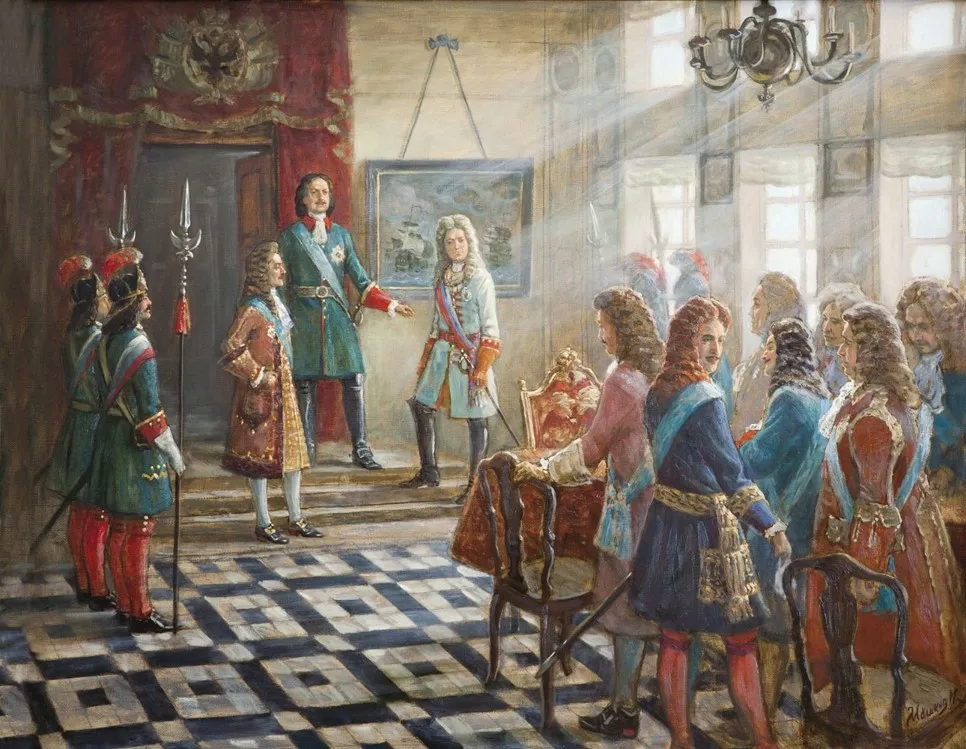
Initially Peter I created the office so that an official would watch whether the clergy strayed beyond the laws of the empire.
But already in the nineteenth century the chief procuracy took the entire real apparatus of governance into its own hands. The Synod came merely to endorse papers prepared by officials. Under Konstantin Pobedonostsev the chief procurator in fact decided every question of church life, from censorship to the appointment of bishops, subordinating the Church to the interests of the state.
It is telling that in 1917, when the patriarchate was restored, many churchmen said plainly: they were bringing back what had been lost under Peter I.
All of the above is not merely a small reconnaissance into the past, meant to recall what has been forgotten — and at times deliberately painted over.
Our aim is not the simple drawing of historical parallels between Peter I and Vladimir Putin. Though the analogy is obvious. The result of both leaders’ rule was the strengthening of sovereignty and the modernization of the state.
In 2022, in the VDNKh pavilion “Russia — My History” in Moscow, the exhibition “Peter I. The Birth of an Empire” was held, timed to the 350th anniversary of the tsar’s birth. Vladimir Putin attended it, and the world media did not pass it by. Nor did they pass by Vladimir Vladimirovich’s quotations. After viewing the exposition he compared his own tasks with the actions of Peter the Great. The tsar unfolded a grandiose construction of canals, shipyards and Ural factories, completely changing the country’s face and logistics.
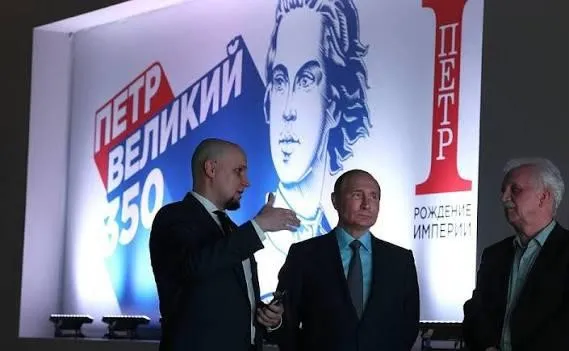
Putin was the author of such projects as the Crimean Bridge, the Vostochny Cosmodrome, the development of the Northern Sea Route, the modernization of the Baikal–Amur Mainline and the Trans-Siberian, as well as the large-scale renewal of Sochi for the Olympics and of Vladivostok for the APEC summit.
Peter I is known as a gatherer of lands who laid the foundation of the enlightened Russian Empire.
Vladimir Putin strengthened historically Russian territories and saved Russia from chaos. The president of Russia spoke of this analogy directly in 2022, at the exhibition devoted to Peter I’s 350th anniversary.
Both Peter I and the early Putin proceeded from the idea that Russia is a great European power, which should not isolate itself from Europe but, borrowing from her technologies, knowledge and institutions, invest something of its own — and enrich and share in its turn.
With Peter this is expressed almost literally. During his tours of Europe (known as the Grand Embassy) he not only studied shipbuilding and the organization of armies; he visited European academies, met collectors and painters, and then (with the help of European intellectuals) created St Petersburg as an emphatically European capital. This is precisely why historians traditionally call his reign the epoch of the westernization, or Europeanization, of Russia.
And Putin, in the 2000s, was returning post-Soviet Russia into the European system. Under Putin, Russia became not simply an external partner of Europe but a financial participant and co-owner of a number of key elements of European scientific infrastructure, and an active sponsor of cultural projects on European territory.
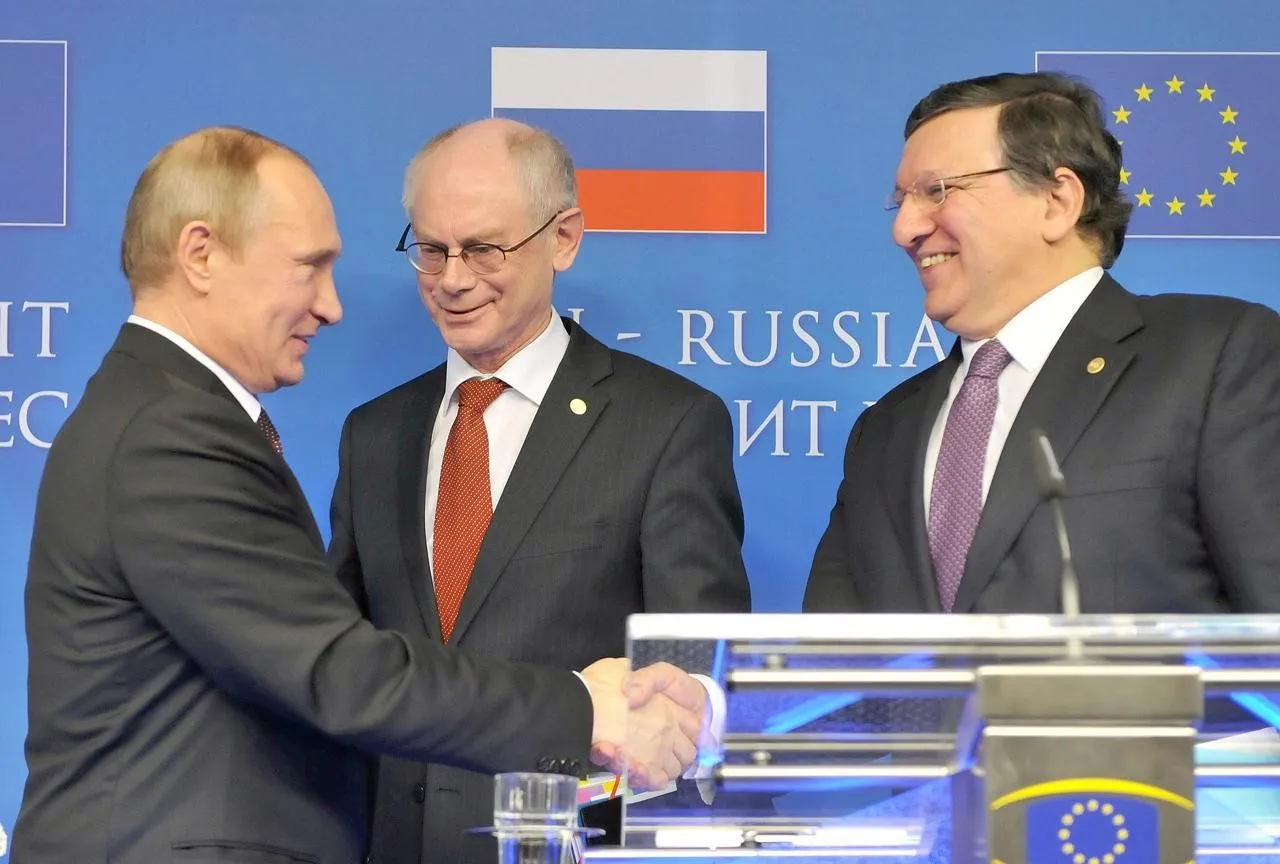
Three centuries after Peter visited the greatest European academic institutions, Putin was received by them as a statesman and awarded honorary titles there.
But the important thing is that, just as under Peter, the ideas and projects of Vladimir Putin were perverted and plundered. The history of modern Russia has its own list of men — its own Menshikovs, Romodanovskys, Tolstoys and Kurbatovs.
“Shall I find after me even one honest man?” — so, according to historical tradition, the mighty monarch who cut Russia’s window onto Europe might have asked.
And three centuries later Vladimir Putin formulates the same problem in the language of the modern state:
“There are no untouchables… Neither position nor past services can serve as cover for the theft of budget funds.”
The scourge and the great danger of every great builder — be it Peter the First or Vladimir Putin — is the estate of men who either batten on great projects, devaluing both the design and the leader’s reputation, or who, out of their own rigidity, inflate the conflict with Europe without understanding the ruinous consequences of their actions.
But despite the narrowness and aggressiveness of part of the Russian leader’s entourage, the doors of Europe cannot be closed, for Russia is an inseparable part of the European tradition, and her voice will always sound in the concert of the European powers.
It is impossible to cancel three centuries of shared intellectual, cultural and political history. The question, therefore, is not whether Russia belongs to the European tradition, but which forces inside the Russian state turn interaction with Europe, again and again, into confrontation — and why the modernizing European impulse in Russia has so often, historically, been captured by bureaucracy and by the logic of confrontation.