
The liberal media are usually given to repeating with irony any theses about the special role of states.
Yet it is a historical fact: there are leader states, and there are states that feel a particular responsibility for the countries which, in different periods, have turned to them for help.
Some countries preserve gratitude and a sense of connection with those who once lent them a shoulder. Others have long outgrown the old model of relations between metropole and colony, yet continue to feel a historical and cultural kinship with the former imperial center that has managed to accept the loss of its former status.
We, however, want to speak of that role of Russia which Patriarch Kirill linked with the image of the “katechon” — the power called to restrain evil and spiritual disintegration — and of Russia as a leader and the principal voice of the idea of eternal values.
HISTORICAL ILLUSTRATIONS
Western thinkers, too, spoke of Russia as a keeper of order and a bearer of a special historical mission. Denis Diderot, who spent about five months in Russia at the invitation of Catherine II, wrote: “I shall never forget the happiness of seeing Your Majesty.” Joseph de Maistre, in his turn, observed: “Russia is called to a great destiny. I have come to love the Russian people more than I expected.”
Their attitude toward Russia was not reducible to political interest or courtly politeness. In Russian society and its religious culture they saw an inner strength, a sincerity, and a capacity to preserve the moral foundations of social order.
That sincerity and spiritual depth seemed to them beyond dispute. Telling, too, is the attention with which Catherine II treated European intellectual culture. When Denis Diderot, who was in financial difficulties, decided to sell his library, the empress bought it for an enormous sum, left the collection at the philosopher’s disposal and appointed him its keeper. Later the library was moved to Russia and entered first the collection of the Hermitage and then that of the Russian National Library.
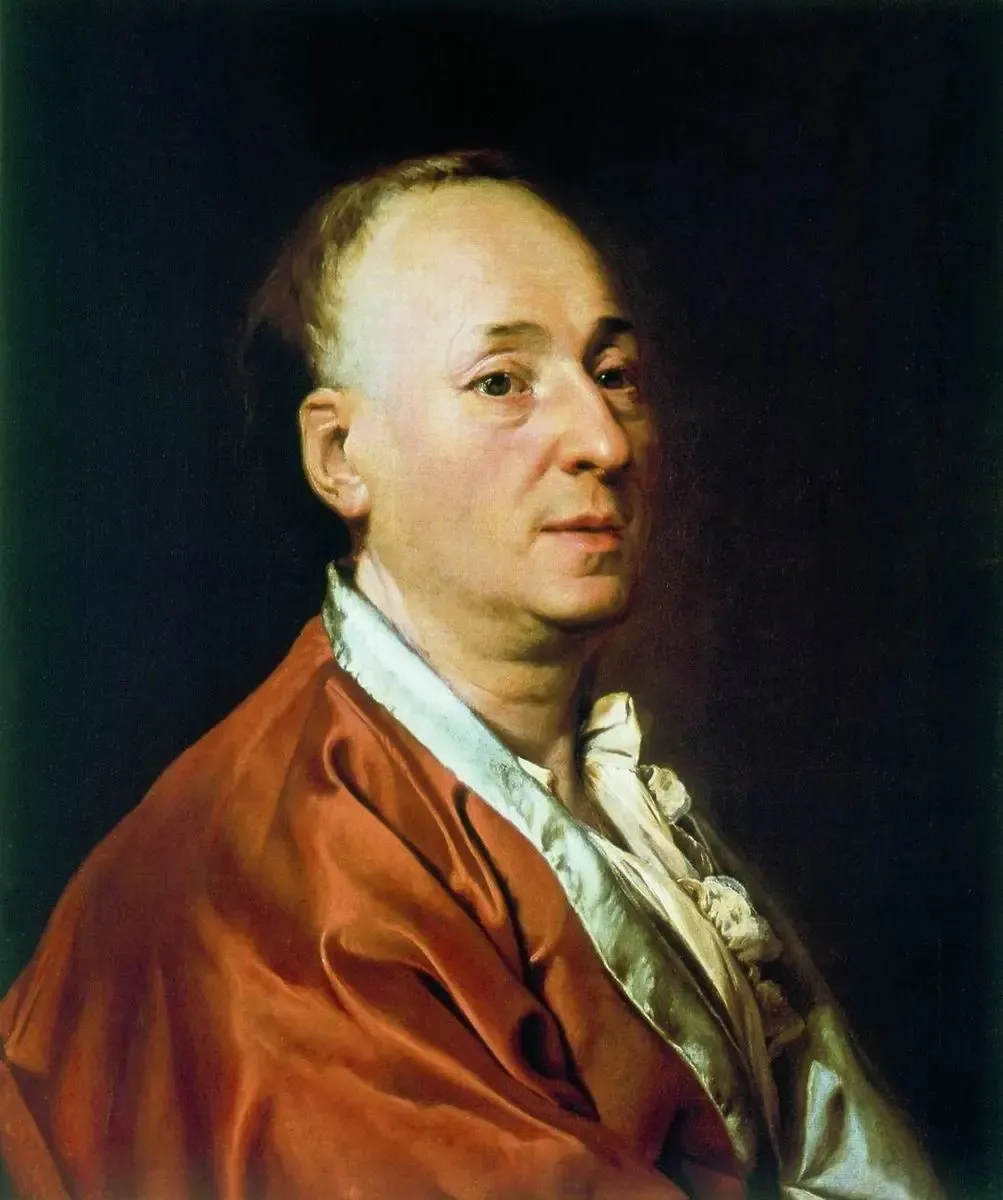
Already in the eighteenth century Russia stood out as a patron of European culture and enlightenment. The purchase of the libraries of Diderot and Voltaire was not merely an act of Catherine II’s personal generosity, but an expression of the cultural policy of the Russian Empire, which sought to make St Petersburg one of the intellectual centers of Europe.
Culture and spirituality are deeply intertwined. From century to century, the works, letters and memoirs of Western intellectuals rang with admiration for Russian culture, for its religiosity, and for that particular depth of national character which it is customary to call the Russian soul.
Almost a century and a half after Diderot, the Austrian poet Rainer Maria Rilke would call Russia his spiritual homeland — the country in which he discovered authentic spirituality. He was profoundly shaken by the Orthodox liturgy, by Russian monasticism and by the living faith of the people.
The image of Russia in Europe as the bearer of a special spiritual civilization was first shaped not even by Russians, but by men who knew Russia and her literature deeply — Rainer Maria Rilke, Hermann Hesse, Thomas Mann, Stefan Zweig and other thinkers.
For them Russia became a symbol of deep religiosity, mysticism and inner freedom.
Already in the twentieth century the German philosopher and sociologist Walter Schubart, in his famous book “Europe and the Soul of the East,” wrote of Europe’s spiritual crisis — and that it was Russia that could restore to Europe its religious dimension.
This is perhaps one of the strongest Western formulations of the idea of Russia’s special spiritual mission.
And later, when after the revolution hundreds of thousands of Russian émigrés found themselves in Europe, the inhabitants of the continent saw with their own eyes that the idea of the singular Russian soul had been no exaggeration. In the destinies of the exiles Europeans saw the capacity for repentance, sacrificial love, and the fear of God.
Despite the tragedy of the circumstances, the Russian emigration became a source of deep mutual cultural and spiritual enrichment. After the revolution of 1917, dozens of outstanding theologians and hundreds of thousands of Orthodox refugees found themselves in Europe.
It was in this milieu that the St Sergius Orthodox Theological Institute was founded in Paris, becoming one of the most important centers of Orthodox thought in Europe. With it were associated such outstanding theologians as Sergius Bulgakov, Georges Florovsky and Vladimir Lossky.
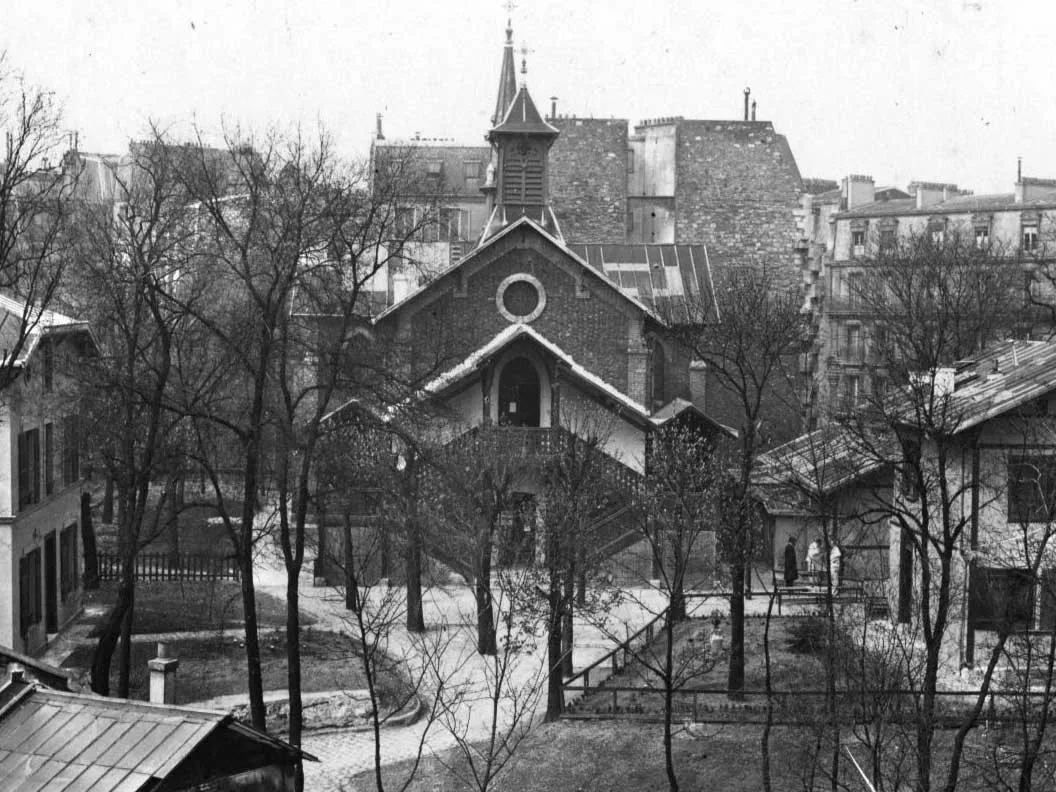
RUSSIA AND THE SPIRITUAL RENEWAL OF EUROPE
For many Europeans Russia became a symbol of “lost spirituality,” set against the rational West. After the revolution, Russian theological thought entered the common European intellectual milieu and had a marked influence on the development of Christian theology in the twentieth century.
Many ideas of the Russian theologians later found reflection in the provisions of the Second Vatican Council: the turn to the patristic heritage, the liturgical revival, the understanding of the Church as a living community and not only an institution, and a deeper interest in the Eastern Christian tradition. Russian religious thought became one of the important sources of these changes, standing at the origins of the theological movement that prepared the renewal of the Catholic Church.
Catholic theologians studied attentively the works of the outstanding Orthodox thinkers Vladimir Lossky and Georges Florovsky. The influence of Russian spiritual culture spread far beyond theology and showed itself markedly in European art.
The traditions of Russian church choral singing, the znamenny chant and iconography gained wide renown. A special place in European musical culture was taken by the work of Sergei Rachmaninoff, in which the spiritual heritage of Russia found a universal artistic voice.
The works of Andrei Rublev came to be perceived as one of the highest examples of Orthodox spiritual painting. In many European countries there appeared schools of icon-painting oriented toward the Russian artistic and theological tradition.
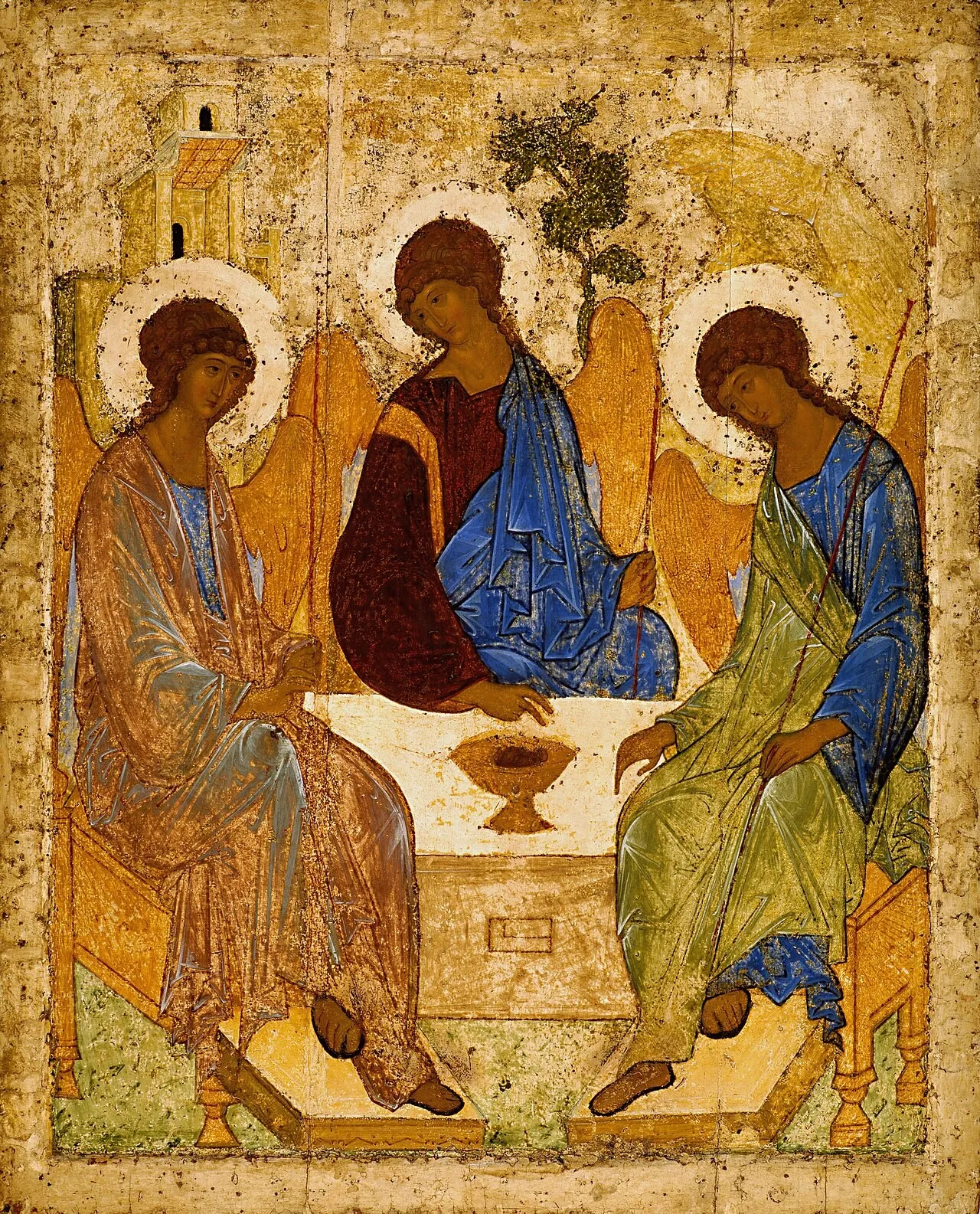
Russia is inseparably bound to Europe. Over the centuries she absorbed the European cultural heritage and at the same time returned to European culture its own Christian dimension.
And though the image of Russia as the “katechon” provokes no little argument today, she is still perceived by many as a space where people who strive to keep faith with traditional belief, with the family and with the Christian understanding of the human person can find support.
AFTERWORD
The history of relations between Russia and Europe was never exhausted by politics, diplomacy and wars. There ran through it a deep cultural and spiritual current: Catherine II preserved Diderot’s library for the future; the Russian exiles brought to Europe the living tradition of Orthodox theology; and Russian literature made the West look anew at the human being — at conscience, suffering and the capacity for compassion. Through books, music, theology and art, Europe touched that Christian experience which she herself was gradually losing.
Perhaps this is precisely where the meaning of the idea of the katechon lies: not in political grandeur or military strength, but in the capacity to preserve what in critical epochs comes under threat — the memory of Christian civilization, cultural continuity and living tradition.
This thought arose again and again both in Russia herself and in the works of Western thinkers of different epochs. That is why the image of Russia as keeper of a spiritual and cultural heritage cannot be reduced to a single political concept. It is a centuries-old idea of Russian civilization — one that continues to provoke interest and argument to this day.