
- In the morning, alarming photographs were taken from a U.S. Navy aircraft flying over Cuba. Following the deployment of conventional weapons, the USSR had begun to deploy SS-4 Sandal medium-range ballistic missiles. They were capable of striking targets across most of the southeastern and eastern United States, including Washington. This meant that the USSR had prepared itself for a first-strike doctrine.
So begins the popular film Thirteen Days, which presents the American version of the events of the Cuban Missile Crisis, when the world found itself on the threshold of nuclear war.
We shall not dispute that version; let us simply note that before this the United States had already deployed its own ballistic missiles in Turkey and Italy. The scope of a single article does not allow us to go deeper into the nuclear balance of sixty years ago, nor is that our task. We simply find Kennedy’s words telling: “The fact that we avoided war is a shared victory — both ours and the Soviets’.”
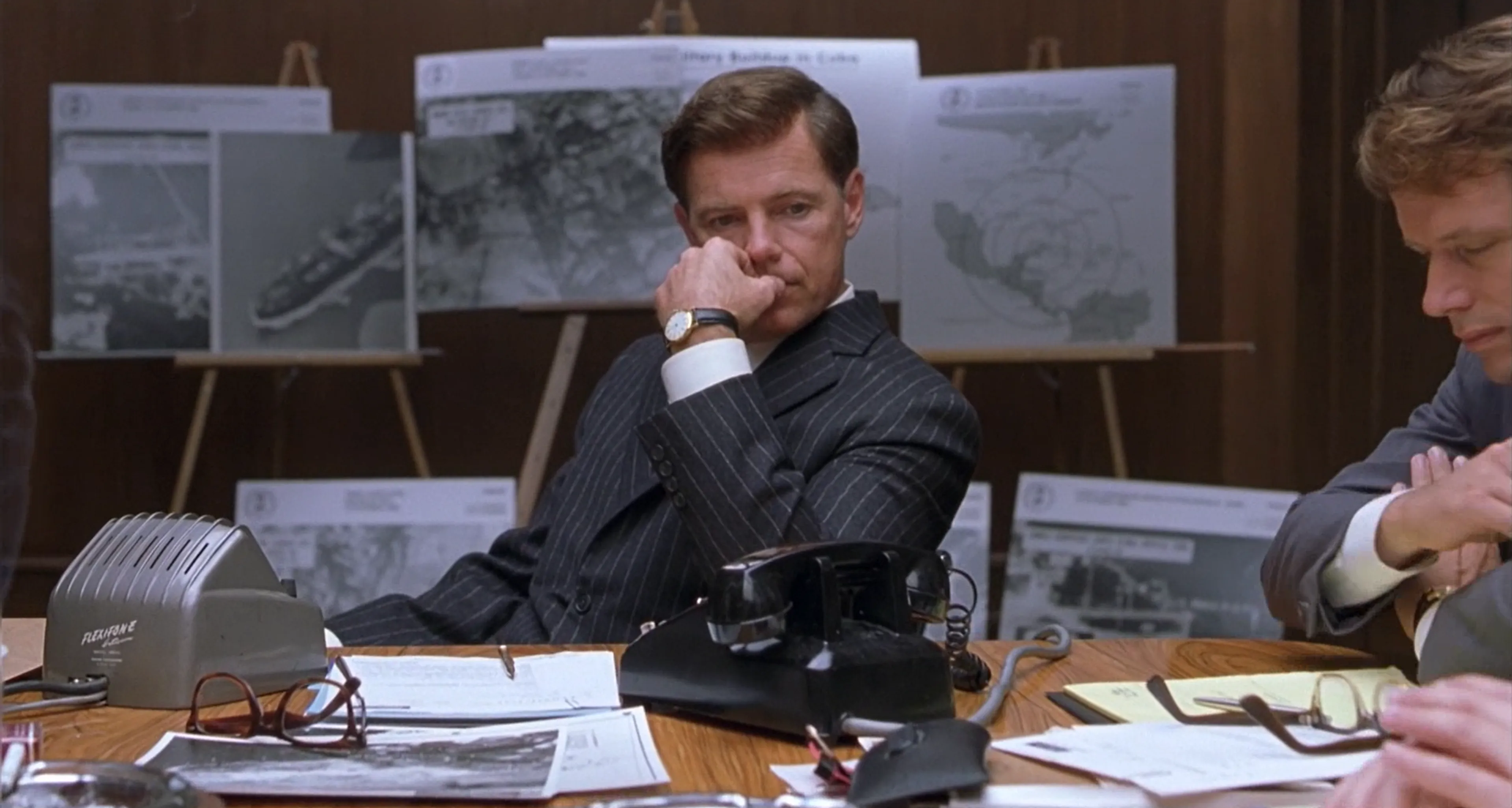
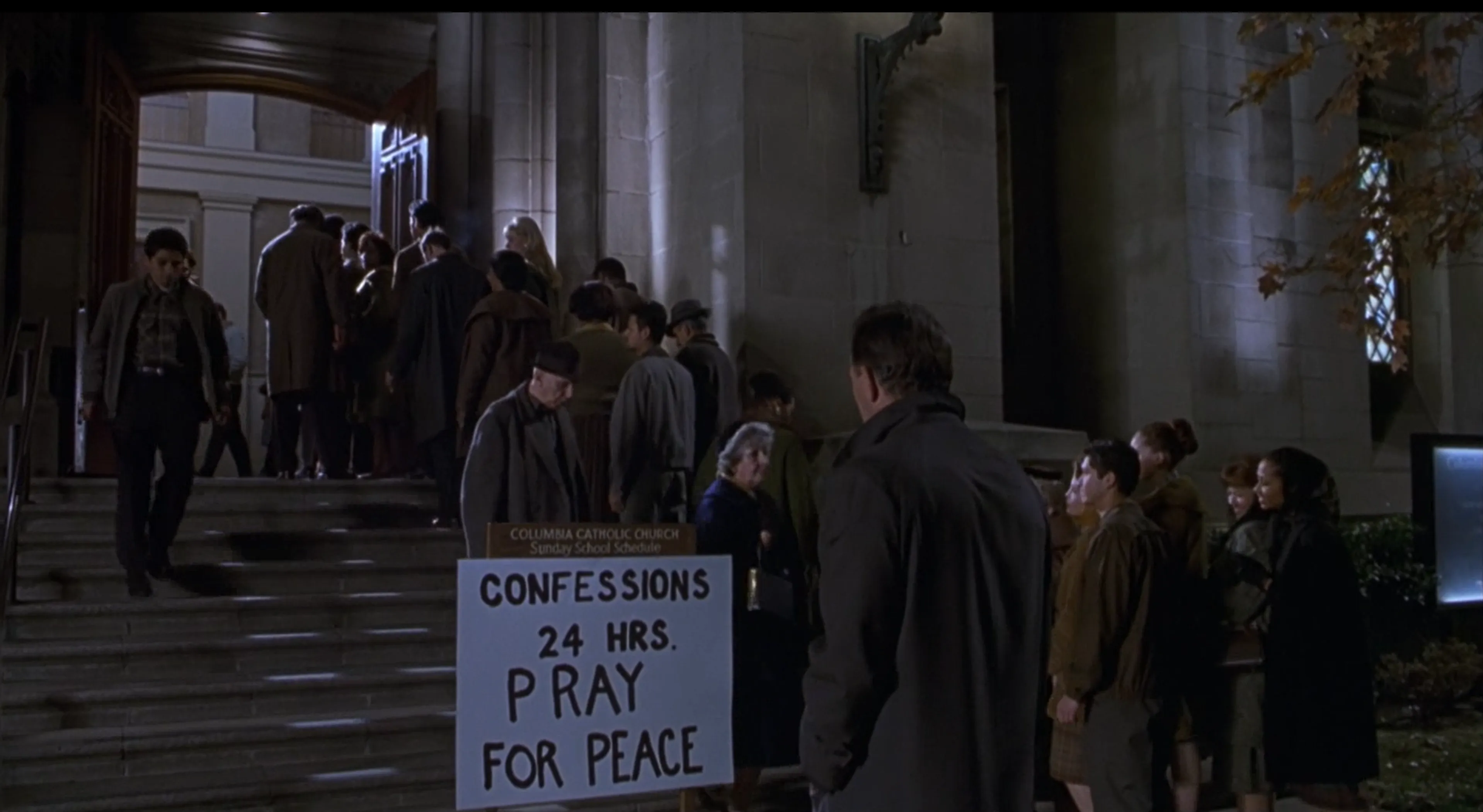
We also find the film’s details telling. The statuette on Kennedy’s desk with the engraved words: “O God, thy sea is so great, and my boat is so small.” A remark dropped, as if in passing, by an American official during those tense thirteen days: “Victories are won in churches.” The shots of a Washington church with the sign “Confessions around the clock.” (Curiously, Kennedy’s adviser did end up joining the line there.)
These details are deeply symbolic — the church was present in the Cuban Missile Crisis as far more than a mere attribute of the mentality and traditions of the American president’s team.
Both the Vatican and the Russian Orthodox Church were actors at the hottest peak of the long Cold War.
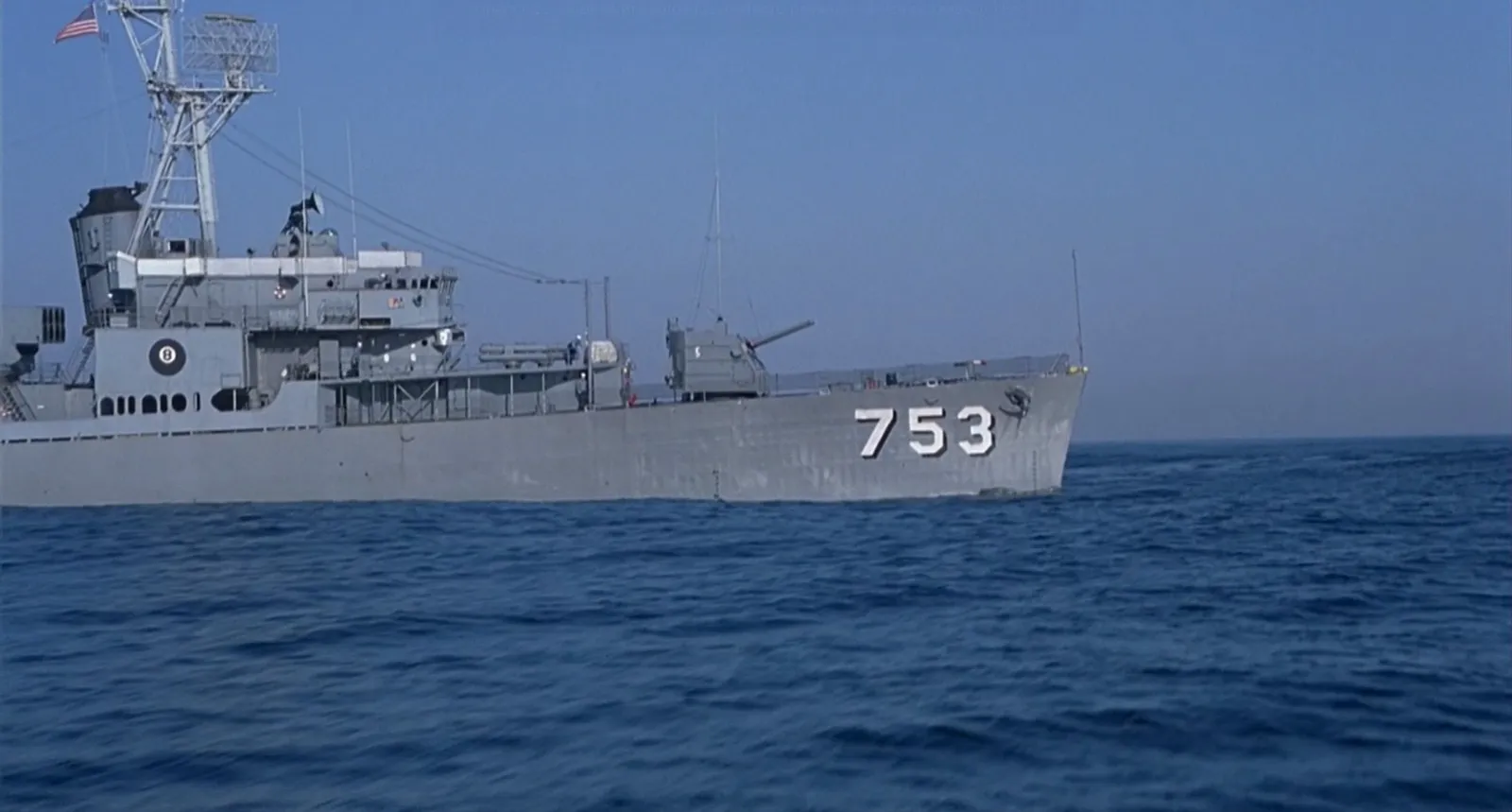
For two weeks the most difficult negotiations went on, with maneuvers of warships in which every millimeter and every awkward move by either side could set off irreversible scenarios. There was the attempt by the Pentagon hawks, who considered the Kennedys weaklings, to play their own game. Judging by the level of nervous tension, it seemed the war was already underway…
And yet at that time, alongside the intricate negotiations of top politicians, there was also the participation of the churches.
An interesting detail. A year before the crisis, the Russian Orthodox Church had become a member of one of the most influential humanitarian organizations — the World Council of Churches (WCC).
The Soviet leadership acquired a powerful international platform, where the ROC delegation voiced the position of the state and promoted the theses of the necessity of disarmament.
This gave the Soviet hierarchs legal standing, the opportunity to travel abroad freely, to publish religious literature for international needs, and to train new cadres.
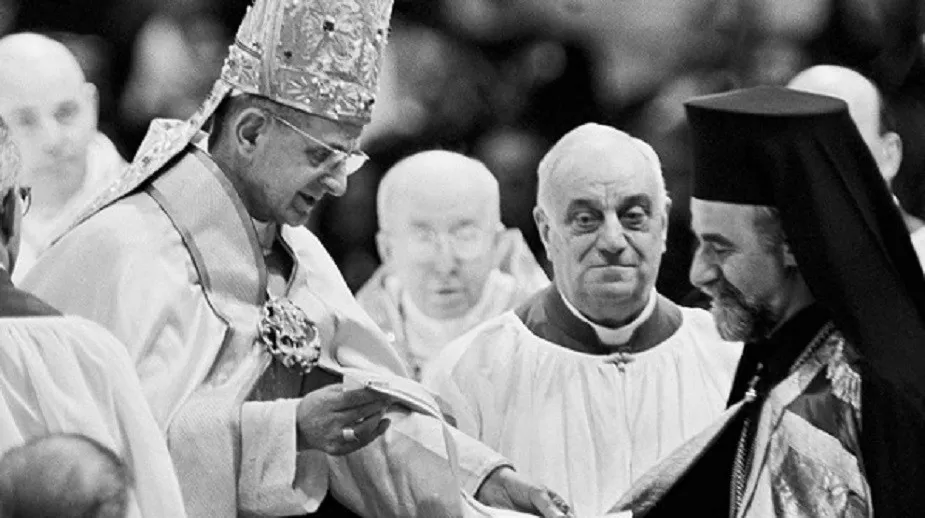
And a few days before the crisis, the Vatican Council opened — a vast world forum of the entire Catholic leadership, at which questions of the fateful renewal of the Catholic Church were to be decided. Naturally, Pope John XXIII wanted representatives of the Russian Orthodox Church to be present there, at least as observers.
Until then, relations between the Vatican and the Moscow Patriarchate had been practically frozen.
The participation of a ROC delegation required the consent of the Soviet leadership, since the external activity of the Moscow Patriarchate was to a considerable degree controlled by the state.
The Soviet leadership saw in this an opportunity to improve its international image, to establish a dialogue with the Catholic Church and an informal contact with the West — and permitted the participation of a delegation of the Moscow Patriarchate.
It is hard to overestimate the development of this channel of communication — all the more so since only five days later the crisis broke out, and humanity found itself facing the real threat of nuclear war.
Of those terrible, fateful days there were three when the churches joined the process of de-escalation:
On October 22, 1962, Kennedy announced a naval blockade of Cuba; the world froze in expectation of a nuclear strike. Nikita Khrushchev was searching for a way to step back without losing face in the international arena.
October 23: Soviet diplomats and intelligence services, through the channels of the Department for External Church Relations headed by Metropolitan Nikodim (Rotov), passed urgent information to the Vatican: the USSR was ready for dialogue if the United States took a step back.
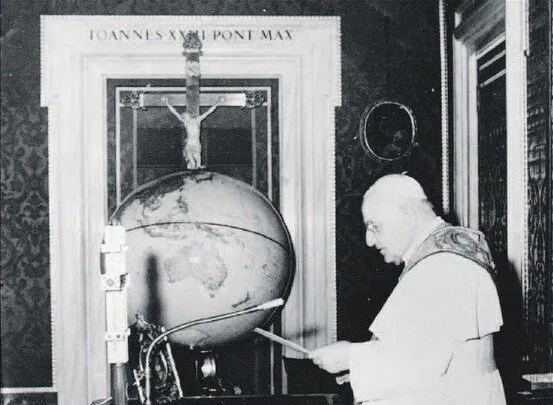
October 24: Having received the signals from Moscow, Pope John XXIII addressed the ambassadors of the USA and the USSR with a personal appeal for peace. That same day the Pope dictated his famous radio message.
October 25: Vatican Radio broadcasts the Pope’s address to the whole world: “We beg all rulers not to remain deaf to this cry of humanity… Let them do all that is in their power to save peace.”
He blamed neither side and addressed Washington and Moscow simultaneously.
For Khrushchev, the Pope’s appeal was an ideal diplomatic way out. The Soviet leader could not yield to the “American imperialists,” but he could declare that he was yielding to the appeal of a spiritual leader and humanist.
The day after the Pope’s address, the main Soviet newspaper, Pravda — an unprecedented event for the atheist USSR — came out with a front-page headline welcoming the peace initiative of John XXIII.
In those same days Metropolitan Nikodim activated his connections in the World Council of Churches in New York. Through American religious figures who had access to the White House, the idea was conveyed to Kennedy: Khrushchev is looking for a compromise. Kennedy, a deeply believing Catholic, took the Pope’s position with the utmost seriousness and used it to restrain his radical generals, who were demanding an immediate bombardment of Cuba.
The Cuban Missile Crisis proved to Nikita Khrushchev that Metropolitan Nikodim had been right: in the international arena, the Russian Orthodox Church is a most valuable resource, one that must not be destroyed.
On the whole, the contacts with the West maintained by the Russian Church made it possible not only to serve the Party’s interests but also to conduct a dialogue that would benefit society as well — even if, at the time, a closed one. And in the long run, the church’s contribution to the conversation of East and West — which later developed into the détente policy of the 1970s — would prove enormous.
Immediately after the crisis, the sweeping campaign to close churches and monasteries in the USSR began to wind down. The authorities understood that for effective work abroad Nikodim needed a “living” church at home.
In April 1963 Pope John XXIII issued his historic encyclical Pacem in Terris (“Peace on Earth”), devoted to peaceful coexistence. The text drew heavily on the theses that had been coordinated, during the Cuban Missile Crisis and after it, through the channel “the Vatican — Metropolitan Nikodim — Moscow.”
Moreover, international activity made it possible to raise a pleiad of brilliant hierarchs — church diplomats who worthily and vividly represented the interests of the Russian people in a multitude of international forums.
In the years of Perestroika — an agonizing period of market transformations for the economy of the vast country — Mikhail Gorbachev met with John Paul II. A little later, official Moscow established diplomatic relations with the Vatican. Later still, both the Vatican and the Moscow Patriarchate supported the adoption of new legislation on freedom of conscience.
The culture of constant dialogue laid down in the 1960s turned, for a Russia overcoming its Soviet legacy, into splendid and fruitful projects.
In the late 1980s and early 1990s, through Catholic charitable organizations (such as Caritas), there began to flow into the USSR:
- medicines;
- humanitarian aid;
- equipment for hospitals;
- assistance to parishes recovering after decades of closure.
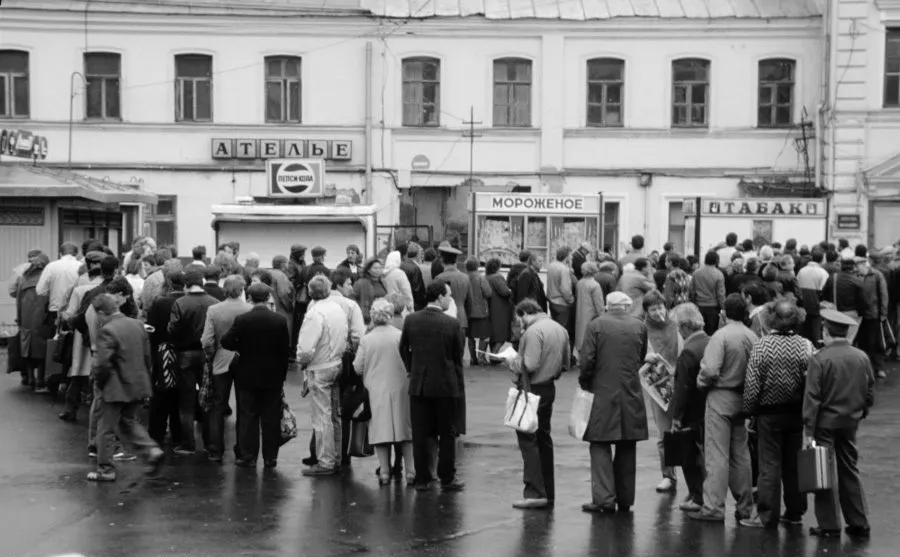
Cooperation also developed through the Community of Sant’Egidio — one of the most interesting and positive storylines of the late USSR and the 1990s.
It is not an official organ of the Vatican, but it maintains close relations with it and is known for its work in three directions:
- aid to the poor;
- interreligious dialogue;
- mediation in peace negotiations.
The history of cooperation with the Community of Sant’Egidio is full of touching stories.
They were connected not with high-profile international negotiations but with a very simple idea: not merely to hand out aid, but to become the friend of a particular person.
Here are a few episodes.
In 1993, Moscow volunteers of the Community of Sant’Egidio began to make regular visits to a residence for veterans of labor. They noticed that many of the elderly needed not so much things as company: some had had no visitors for years.
Thus was born the principle of “Give one hour” — to visit the same person regularly, to talk, to read books, to bring photographs, to offer birthday greetings.
In Moscow the community has worked with the homeless for many years. The volunteers try to know them by name rather than perceive them as a faceless mass.
One such story is the fate of a homeless woman named Natasha. After her death, her friends from the community saw to it that she was given a Christian burial from an Orthodox church. This was unusual: many homeless people in those days were buried by municipal services without a funeral service and without anyone coming to say farewell.
In that period of the country’s transition onto the rails of a market economy, when the state system of social assistance was going through a grave crisis, the Community of Sant’Egidio became one of the first international Catholic initiatives to establish not episodic actions but a permanent presence in Moscow — from 1993 onward. The volunteers cooperated with Orthodox parishes and did not aim to convert people to Catholicism. That is why many Orthodox priests perceived their work as an example of Christian service rather than as missionary activity.
In the early 1990s the Community of Sant’Egidio helped a once-atheist society remember its noble, self-sacrificing soul — so that, a little later, the Russian Orthodox Church could turn to secular Europe and remind it of its Christian roots.
A major role was played by the then chairman of the ROC’s Department for External Church Relations, the future Patriarch Kirill. Thanks to its independent status, the community could maintain contacts with those with whom official diplomacy found it hard to work.
He met regularly with representatives of the Holy See. Despite serious disagreements, the two sides managed to preserve a permanent channel of communication. It was these contacts that later made it possible to avoid a complete rupture of relations.
In many cases this aid was not divided along confessional lines and reached all who were in need. After the collapse of the USSR, the scale of the humanitarian programs only grew. Just as during the Cuban Missile Crisis, when the churches became a reliable channel of communication between the two superpowers in preserving peace, so at the turn of the 1990s the churches served as a bridge, lending the state a shoulder and saving society.
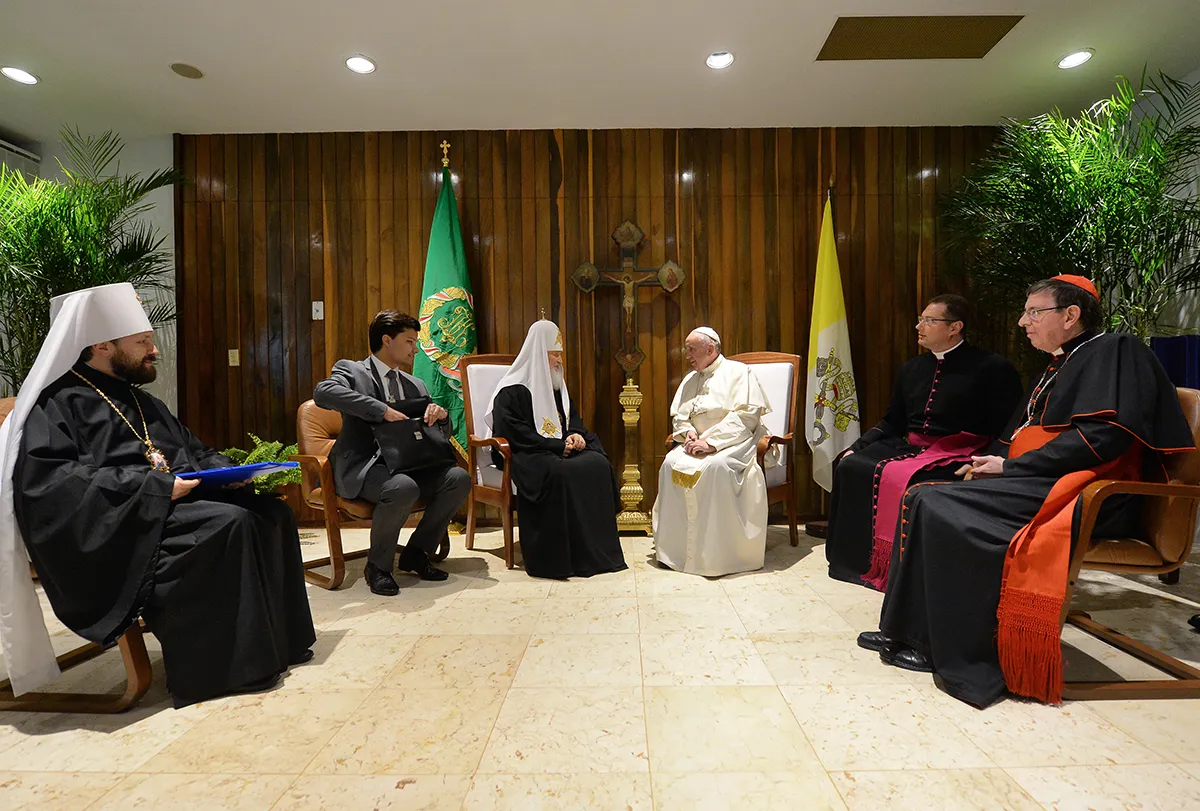
And now the historic meeting of Patriarch Kirill and the late Pope Francis at the Havana airport in 2016 no longer seems accidental. Cuba once again became the place where the impossible proved possible — a meeting between the primate of the Russian Orthodox Church and the Roman pontiff, separated by almost a millennium of church history and by decades of political mistrust.
If in 1962 this island became a symbol of a world saved from nuclear catastrophe by diplomacy, then more than half a century later it turned into a symbol of the possibility of reconciliation through church dialogue. History seemed to join two epochs: the Cuban Missile Crisis, when the voice of the church helped sustain the striving for peace, and the twenty-first century, when church diplomacy became a reliable channel of communication between divided worlds. Cuba proved to be not only a geographical but a historical symbol of the fact that even after the deepest conflicts, bridges can be rebuilt.
It is no accident that even today the church channels of communication between Russia and the European Christian world continue to exist, despite the gravest political crisis. For any state leadership, preserving at least a minimal space for dialogue is not a display of weakness but a strategic resource that may prove to be in demand at the moment when the opportunity for a great political reconciliation arises.
As history shows, it is always easier to destroy the last bridge than to build a new one. That is why the preservation of church dialogue should be regarded not as a concession by either side, but as an investment in a future peace.