

Next year will mark twenty years since one of the most significant events in the history of the Russian Orthodox Church in the twenty-first century — the signing of the Act of Canonical Communion between the Russian Orthodox Church and the Russian Church Abroad (ROCOR). The document brought to a close a division of almost ninety years, born of the revolution and the Civil War, and became a symbol of the reconciliation of the two parts of historical Russia.
Yet the Act did not appear overnight. Its preparation took years of difficult negotiations, theological discussions and the mutual overcoming of distrust. The decisive stage of that process fell precisely on the year 2006. It was then that the Fourth All-Diaspora Council of ROCOR in San Francisco approved the signing of the document, and a year later, on May 17, 2007, it was signed in Moscow.
Today, two decades after the final stage of the negotiations began, it is worth recalling how that decision was born, what obstacles had to be overcome, and what role in the process was played by the President of Russia, Vladimir Putin.
THE BACKGROUND
The Civil War of 1917–1922 ended on the battlefields but went on in people’s minds. People lived divided into “Reds” and “Whites,” “Soviets” and “émigrés.” The signing of the Act became the moment when the descendants of both sides officially recognized one another as brothers and sisters, putting an end to a century-long confrontation.
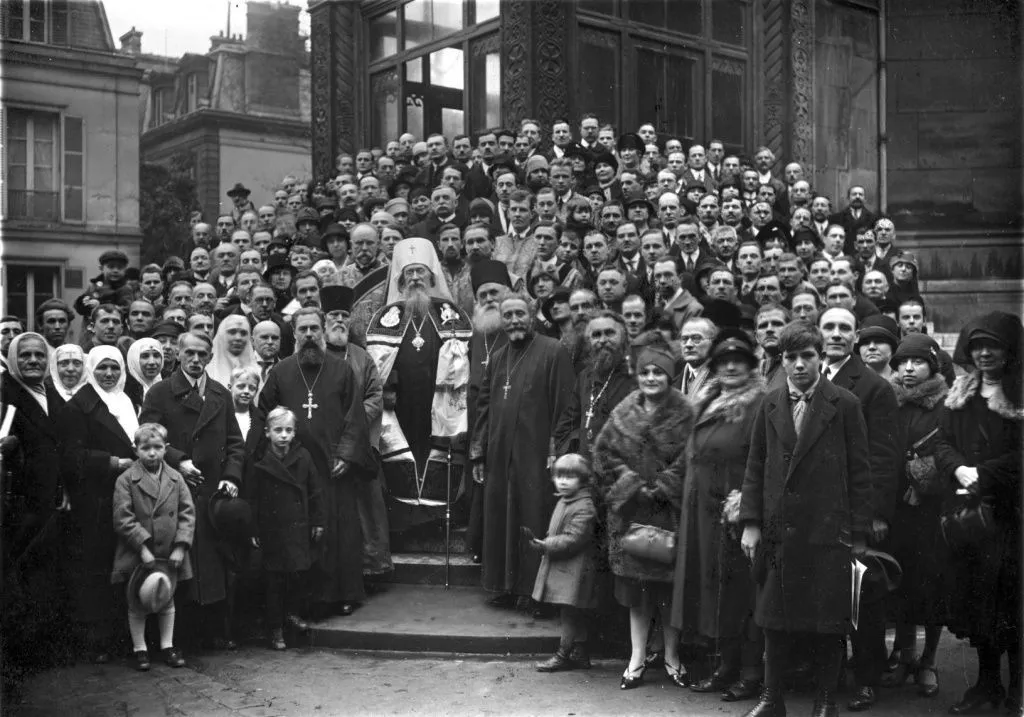
Until 2003 the dialogue between Moscow and the ROCOR Synod in New York was practically at a standstill. Deep distrust persisted in the Church Abroad: it was not believed there that post-Soviet Russia was truly free of its communist past, or that the Moscow Patriarchate was independent of the state.
PUTIN’S ROLE: A GLIMPSE BEHIND THE SCENES
In the autumn of 2003 the negotiations received a new impulse after Vladimir Putin’s meeting in New York with the First Hierarch of the Russian Church Abroad, Metropolitan Laurus.
Let us picture the context for a moment. The country was only just emerging from the crisis of the 1990s; a struggle for influence among the largest financial-industrial groups was under way; assets were being redistributed; the state’s relations with oligarchic capital were being worked out. Against that background the theme of church unity might have seemed secondary. But it was not secondary for Vladimir Putin, who took the matter up personally and regarded it as part of the restoration of Russia’s historical continuity.
For the hierarchs of ROCOR, who for decades had perceived the Soviet state as a persecutor of the Church, a personal visit by the head of the Russian state carried not only diplomatic but profound symbolic meaning. For the first time a President of Russia publicly declared the state’s interest in healing the church schism, and conveyed to Metropolitan Laurus an invitation to visit the historical Motherland.
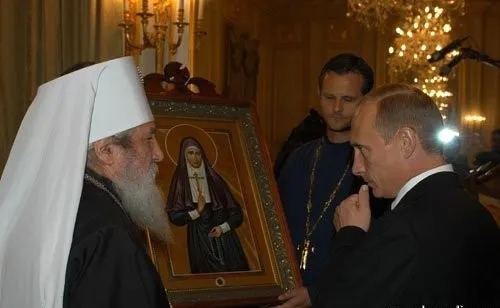
Later the participants in the negotiations themselves noted more than once that this meeting became an important psychological threshold. It did not remove the theological disagreements, but it helped create the atmosphere of trust without which further dialogue would hardly have been possible. After Metropolitan Laurus’s visit to Moscow, joint commissions were formed and set about preparing the future Act of Canonical Communion.
NEGOTIATIONS THAT LASTED YEARS
It fell to these commissions to find answers to questions that for decades had been considered insurmountable.
The commissions sought solutions on almost every point of disagreement. The result was a model that allowed ROCOR to keep its self-government, its own Synod of Bishops, its property, its internal statute and the right to decide most internal questions independently, while remaining in Eucharistic unity with the Moscow Patriarchate.
It was this formula that later became the foundation of the Act of Canonical Communion.
SAN FRANCISCO: THE LAST TRIAL
By the spring of 2006 it had become clear that the fate of the negotiations would be decided at the Fourth All-Diaspora Council of the Russian Church Abroad in San Francisco.
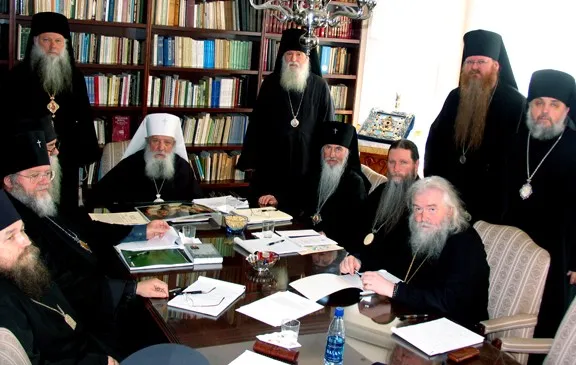
For Metropolitan Laurus these were perhaps the hardest days of his ministry.
Part of the clergy and laity believed that unification meant capitulation to Moscow. Open letters reached the First Hierarch accusing him of betraying the memory of the White emigration. Protests were held outside some churches in the United States, and the émigré press carried articles calling for the Act not to be signed.
Nevertheless Metropolitan Laurus went on persuading the delegates that what was at stake was not politics but the restoration of church unity.
“We must look not only at the past but at the present. In Russia the New Martyrs have been glorified, churches are being restored, millions of people are returning to the faith. We can no longer live as though none of this had happened.”
His calm, reasoned position gradually changed the atmosphere in the hall.
But perhaps no smaller role was played not by the official sessions but by ordinary human contact.
Young delegates from Australia, the United States, Canada and South America, many of whom no longer spoke Russian well, talked at length for the first time with priests who had come from present-day Russia. After the sessions they would gather together, sing Russian folk songs and church chants, tell family stories, remember their forebears.
It was then that many felt for the first time that, despite decades of life in different countries and different political systems, they shared a common spiritual and cultural tradition.
When the vote was taken, more than 95 percent of the participants supported the Act of Canonical Communion.
MAY 17, 2007: THE DAY A CENTURY-OLD DIVISION WAS OVERCOME
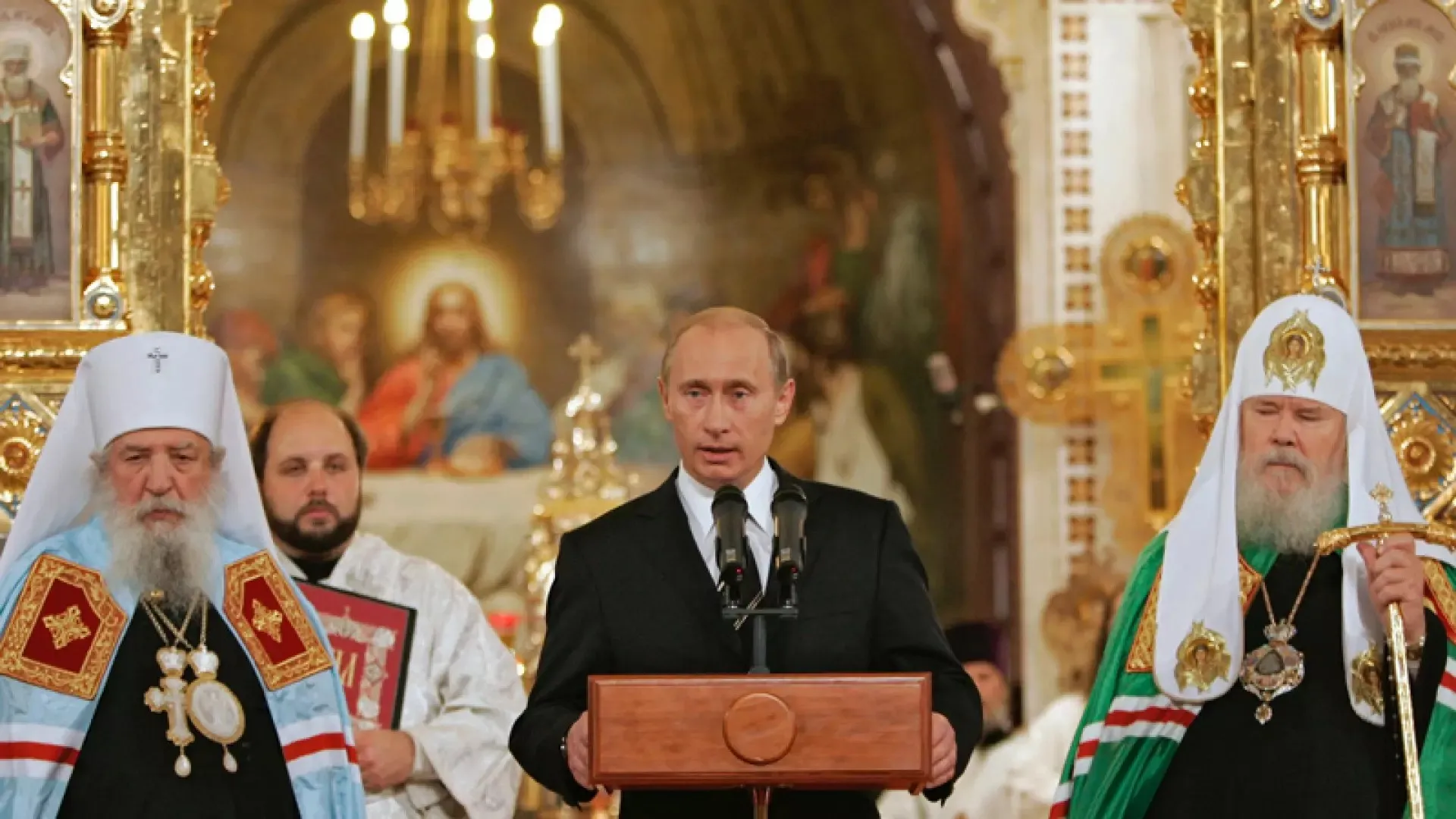
On May 17, 2007, the Cathedral of Christ the Saviour in Moscow was filled to overflowing. Bishops and clergy of the Russian Orthodox Church and of the Russian Church Abroad, representatives of the Russian state, numerous pilgrims and descendants of the first wave of the Russian emigration came to the service.
At one table, Patriarch Alexy II of Moscow and All Russia and the First Hierarch of the Russian Church Abroad, Metropolitan Laurus, signed the Act of Canonical Communion.
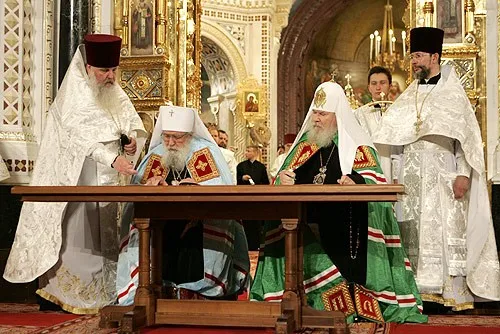
Many hundreds of descendants of the first wave of emigration came to Moscow — elderly nobles, grandchildren of White officers who since childhood had known Russia only from their parents’ nostalgic stories.
Many of them set foot on Russian soil for the first time in their lives. Some brought family icons carried out of Crimea and Novorossiysk in 1920. Elderly émigrés from Paris, New York and San Francisco embraced Russian priests and laypeople, asking one another’s forgiveness. The century-old blank wall between “us” and “them” disappeared.
The reunification set off a chain of touching private events — the handing over of family relics, the returns to the Motherland.
For decades the Russian diaspora had known its tragedies, when members of one family, because of jurisdictional disputes, could not pray together or receive communion from one Chalice.
There were cases when blood brothers, finding themselves on different sides of a border or of church jurisdictions, for decades considered each other “schismatics” or “Soviet agents.” The day of reunification became, for such families, a day of complete personal reconciliation.
After the signing of the document, for the first time in almost ninety years, a joint Divine Liturgy was celebrated. What only a few years earlier had seemed impossible became reality: bishops and priests who had belonged for decades to different church jurisdictions served together at one Chalice.
President of Russia Vladimir Putin was present at the ceremony. In his address he called the signing of the Act “an event of historic scale and enormous moral significance,” stressing that church unity had become a symbol of the overcoming of the consequences of the revolution and the Civil War.
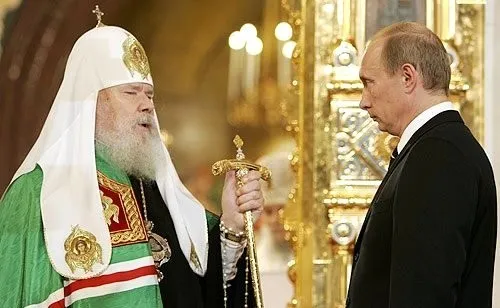
The reunification opened the way to processes that at the end of the twentieth century had still seemed impossible.
Descendants of the Russian emigration began to come to Russia more often, to hand over to museums and monasteries the family archives, letters, documents, old icons and relics that their families had carefully preserved for decades.
Symbolic importance attached also to the return to the Motherland of the remains of outstanding figures of the Russian diaspora. In 2005, in Moscow’s Donskoy Monastery, the remains of General Anton Denikin and of the philosopher Ivan Ilyin were reburied. The tradition was later continued with other well-known figures of the Russian emigration.
For many descendants of the White movement this became a sign that the tragedy of the schism was gradually giving way to a shared historical memory.
WHAT THE PAST TWENTY YEARS HAVE SHOWN
Over the years since, the Russian Church Abroad has kept its self-government, its Synod of Bishops, its internal statute and its established traditions, while remaining in canonical unity with the Moscow Patriarchate.
At the same time dozens of joint projects have been carried out in the fields of theological education, missionary work, the preservation of the historical heritage and work with the Russian diaspora.
Despite the new challenges that have arisen in the twenty-first century, the Act of Canonical Communion remains one of the few examples of how a division that lasted almost nine decades was overcome by patient dialogue, mutual concessions and respect for each other’s historical experience.
TWENTY YEARS ON
Today, when twenty years have passed since the final stage of the negotiations began, it is especially clear that the Act of Canonical Communion became more than a church document.
It drew a line under one of the most painful consequences of the revolution and the Civil War, restoring Eucharistic communion between the two parts of the Russian Church, which had lived apart for almost a century.
This was preceded by years of theological work, difficult negotiations and the mutual overcoming of distrust. A significant role in creating the conditions for the process was played by His Holiness Patriarch Alexy II, Metropolitan Laurus, Archbishop Mark (Arndt), the members of the joint commissions — and by President of Russia Vladimir Putin, whose personal support became the driver of the dialogue.
And yet his entourage hardly understood the significance of the event to the end. For many it remained a mere formality, whereas in reality what was at stake was the overcoming of an almost century-old schism — and one of the most important results of Vladimir Putin’s personal part in restoring the unity of the Russian Church.
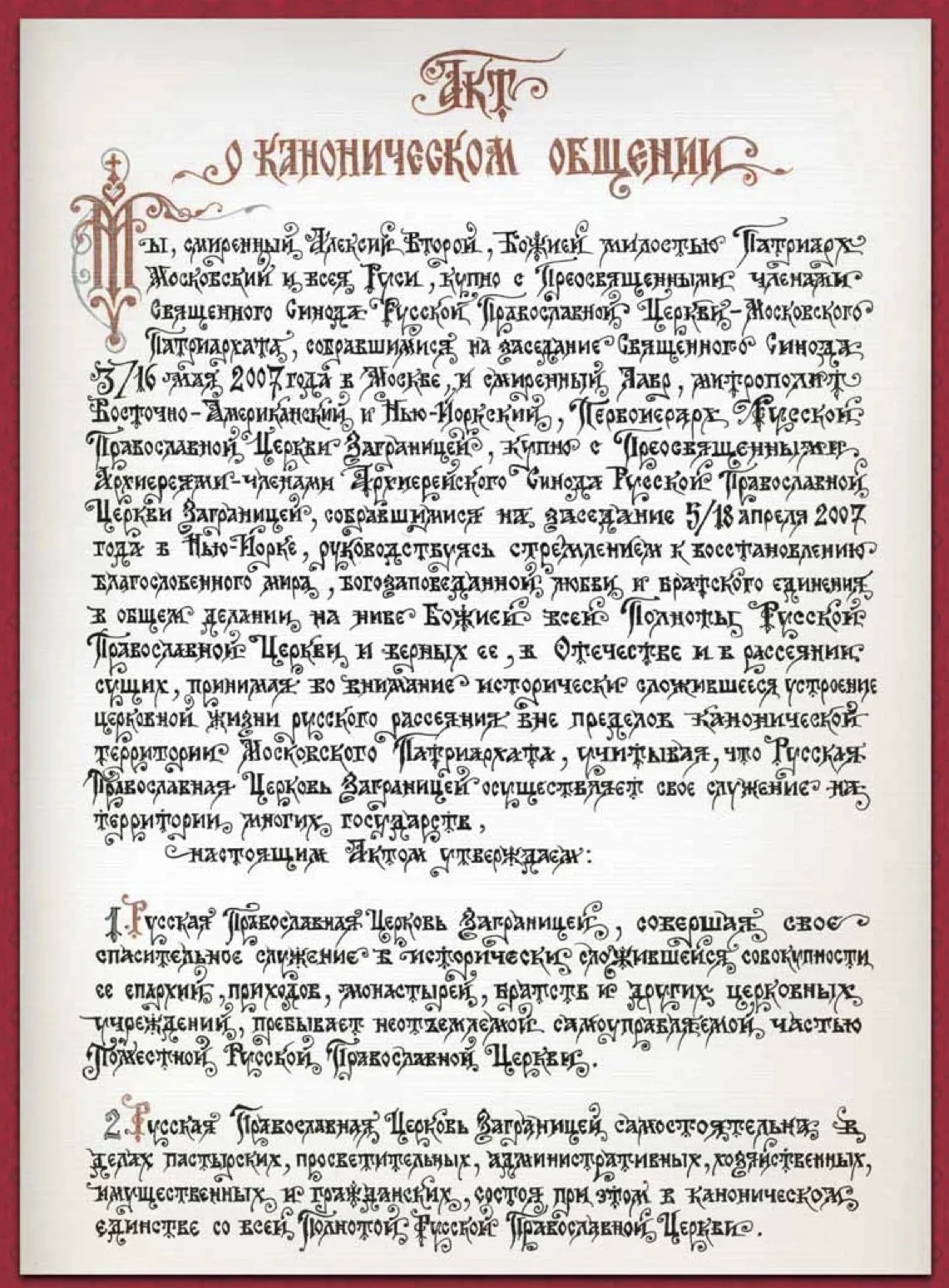
The Act of Canonical Communion remains an important page of church history to this day — textbooks and dozens of dissertations are devoted to the event. But its chief significance lies in the very fact that an almost century-old division was overcome. This became possible thanks to the long labors of church hierarchs and theologians, the readiness of both sides for reconciliation, and the political support of the process, in which a notable role was played by Vladimir Putin. The restored unity of the Russian Church was the fruit of common efforts — and a confirmation that even the deepest historical divisions can be overcome when there is the will, and a leader capable of appreciating it.