

Summer, usually poor in resounding events, nevertheless gives us two feasts whose significance reaches far beyond the church calendar. They help us understand not only the history of the Russian Church, but much of what is happening today — both in politics and in Russia’s relations with Europe.
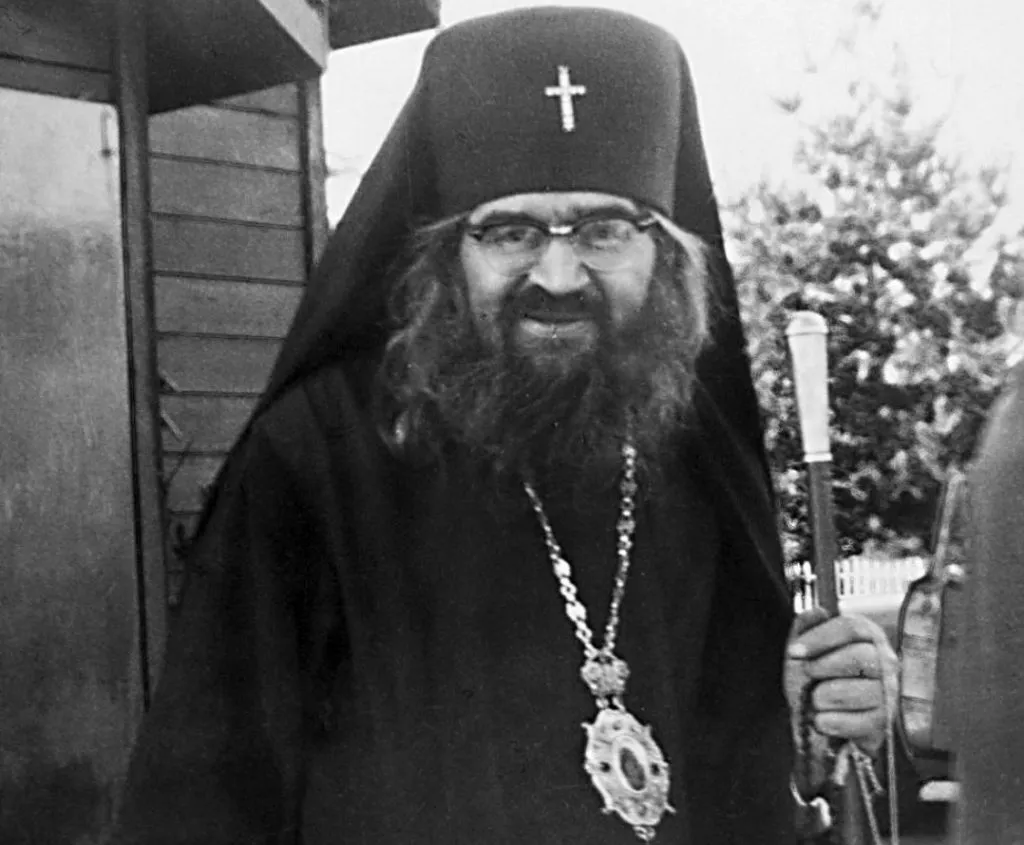
The summer months bring the days of commemoration of two saints. The first is St John of Shanghai, one of the most venerated saints of the Russian Church, an archpastor of the Russian Orthodox Church Abroad (ROCOR), who is often called the chief spiritual gift of the Russian diaspora to Europe.
The second is St Victor of Marseilles. What, one might ask, could a Roman martyr of the third century have to do with Russian history? Yet it is precisely this unexpected connection that explains the phenomenon of ROCOR better than any historical studies or analogies.
A little background.
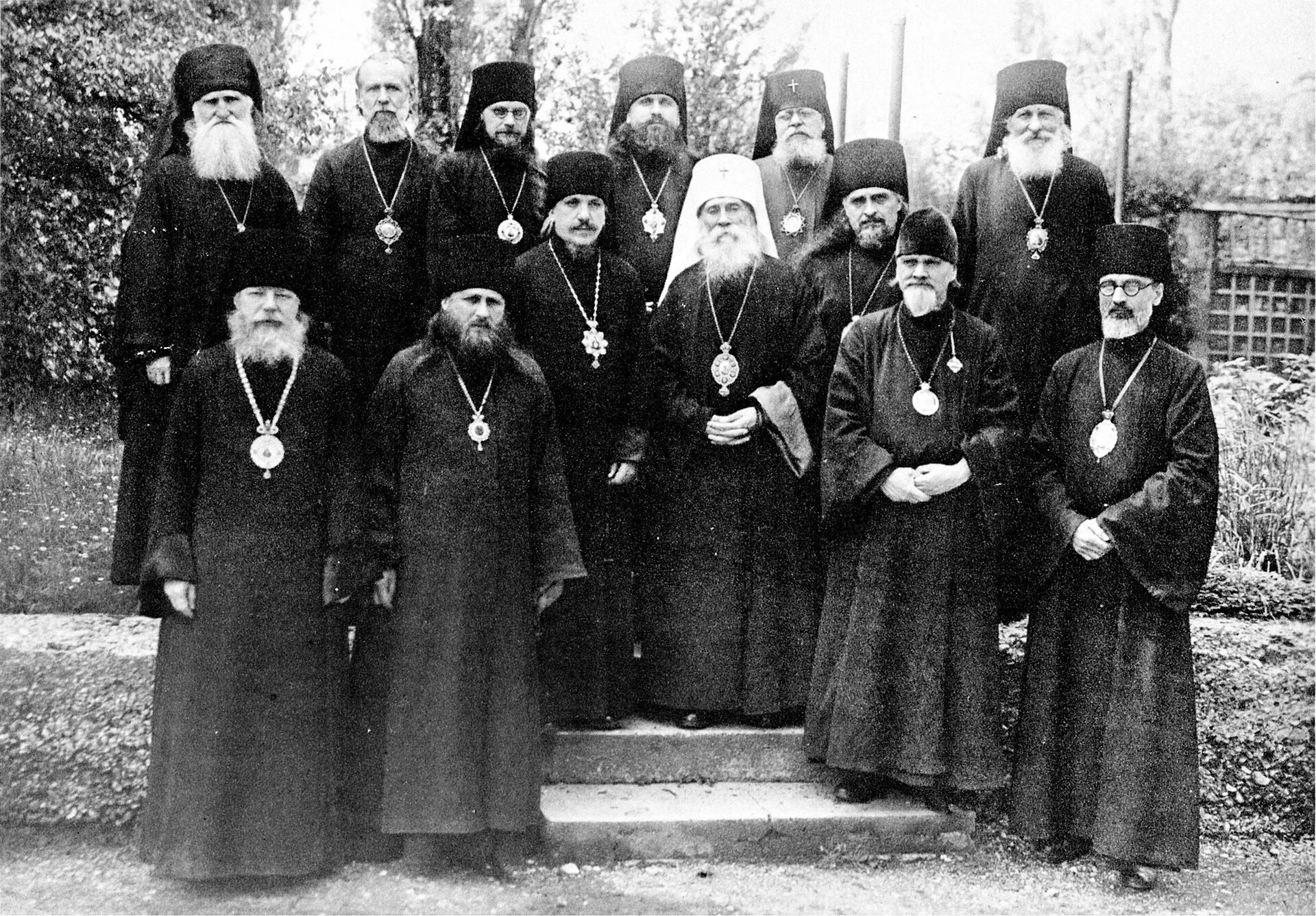
In 1921, Russian bishops who had fled the Bolsheviks gathered in the Serbian town of Sremski Karlovci (see our article “How the Russian Communities of Paris, London, and Belgrade Became the Architects of European Orthodoxy”) and resolved to organize the Russian Church Abroad. The first sessions were held literally “out of suitcases.” The Synod had arrived in Serbia with a draft of a church structure that was destined to become at once the ark of Holy Russia in exile and a quiet enlightener of Europe.
The bishops were practically without means. Many had lost everything — homes, property, episcopal sees. They understood that they might never see Russia again. But instead of despair, they resolved to preserve the Church, the services, the theological schools, and the memory of their country for future generations. No one could then imagine that the exile would stretch on for almost a whole century.
The paradox of history is that, in striving to preserve pre-revolutionary Russia unchanged, ROCOR imperceptibly turned itself into an international, multilingual Church.
In time it became clear that ROCOR’s task was far broader than simply ministering to Russian refugees. It was not only bishops and priests who found themselves abroad. A significant part of Russia’s military, scholarly, cultural, and aristocratic elite had gone into exile. Around the parishes of ROCOR there gradually formed a particular milieu in which the traditions of pre-revolutionary Russia lived on — from church singing and classical education to notions of service to the state, officer’s honor, and responsibility before history. In a sense, it was the Church Abroad that became the ark not only of the Orthodox faith but of Russian historical memory.
Today, in its European parishes, the descendants of White officers pray side by side with new émigrés from the countries of the former USSR, with Frenchmen, Germans, Englishmen, and Swiss. If a believer calls this a miracle, it is hard to argue. But every miracle has people through whom it is accomplished.
One of them was St John of Shanghai.
He not only built churches, opened orphanages, made daily rounds of hospitals, and cared for orphans. He accomplished something that today seems almost incredible — he helped Europe rediscover its own Orthodox history.
It was St John who reminded the world that before the Great Schism of 1054 Western Europe had been part of the one Orthodox Church. Consequently France, Ireland, Britain, Germany, and Scandinavia have their own host of Orthodox saints.
So Paris remembered St Genevieve once more. Ireland — St Patrick. Northern Europe — St Ansgar.
And Marseilles — St Victor.
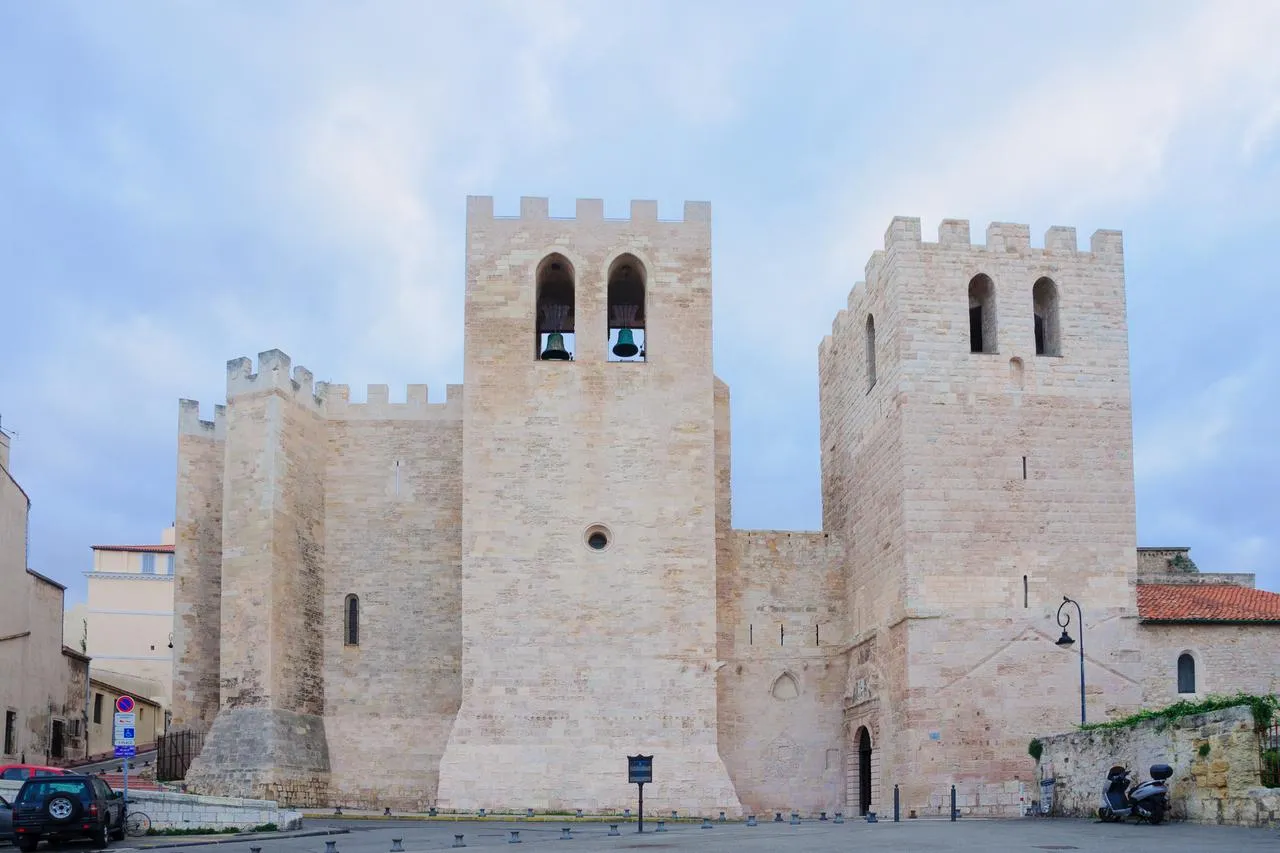
St Victor was a Roman officer of the third century. During the persecutions of the emperor Maximian he refused to sacrifice to the pagan gods and openly confessed Christ. After cruel tortures he was executed, and over the place of his burial arose the famous Abbey of Saint-Victor — one of the oldest monasteries in France.
For most French people, St Victor was a monument of the distant past. But for the Orthodox Church he never ceased to be a saint. He lived seven centuries before the division of East and West, and therefore belongs to the whole Universal Church.
It was St John of Shanghai who insisted on returning such saints to the Orthodox calendar. Thanks to his authority and to the labors of ROCOR, the ancient ascetics of the West once again took their place in the Orthodox calendar of saints.
For Europeans embracing Orthodoxy, this was a true revelation. They did not need to “become Russian.” They were returning to the spiritual sources of their own land. Orthodoxy ceased to be an exotic Eastern religion and revealed itself once more as part of European history.
Thus the Russian emigration unexpectedly helped Europe to remember itself.
The first generation of émigrés built an “invisible Russia” around its churches. The parishes in Munich, Brussels, Geneva, and London became not only places of prayer but centers of Russian culture, education, scouting, and charity.
Later, services began to be celebrated in German, English, and French as well. Native Europeans began to come into the Church. One of the most striking examples is Metropolitan Mark (Arndt), a German by origin, who became one of ROCOR’s foremost hierarchs and for many years headed its Diocese of Germany.
That is why ROCOR is often called not simply the Church of the emigration, but the Church of hope. It was created by people convinced that one day the division of the Russian people would come to an end.
And this hope was fulfilled in 2007.
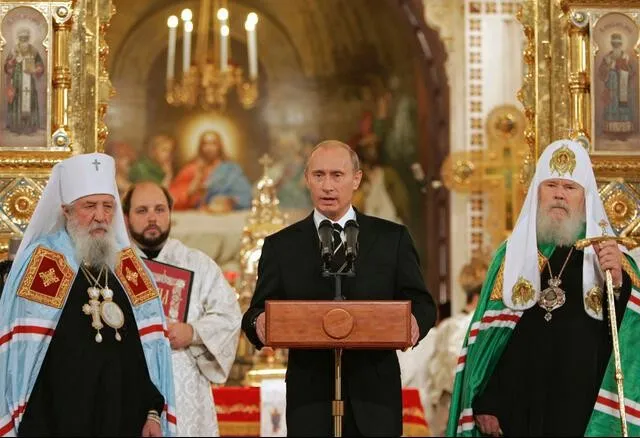
The reunification of the Russian Orthodox Church and the Russian Orthodox Church Abroad in 2007 (it was sealed by the signing of the Act of Canonical Communion) was more than the overcoming of an ecclesiastical division. It symbolically closed one of the last unhealed rifts of the Civil War. The Russian diaspora was returning as the keeper of a priceless spiritual and cultural heritage that for decades had been carefully preserved far from the Motherland.
This required both the wisdom of church hierarchs and the political will of the Russian state. Vladimir Putin played a key role in the process of reunification, regarding the restoration of church unity as part of a broader historical process of overcoming the tragedies of the twentieth century. The signing of the Act of Canonical Communion became a symbol that Russian history had regained its continuity, and that the spiritual heritage of pre-revolutionary Russia, preserved by the Russian Church Abroad in Europe, had returned into the single space of the Russian Church.
And today it is especially symbolic that in Marseilles St Victor is being remembered once again. The memory of a martyr of the first centuries of Christianity is joined here with the continuation of the work of St John of Shanghai and of the whole Russian Church Abroad.
Perhaps this is the chief paradox of the Russian emigration. Leaving the Motherland, it was certain it was losing Russia forever. It turned out otherwise. Having preserved in Europe the traditions, the sacred treasures, the memory, and the culture of historical Russia, it was one day able to bring them home. And so the history of ROCOR’s exile became, in the end, a history of return. Of Russia — to itself, and of Europe — to the memory of its own Christian origins. In this sense John of Shanghai and Victor of Marseilles stand side by side — as symbols of the meeting of Russia and Europe not through politics or war, but through the shared memory of the first millennium of Christianity.