
Russia and Europe are living through the sharpest of conflicts, one in which the hawks of Russia’s political Olympus declare that mending relations with Europe is impossible. Sceptics say that the finale of Russia’s historical mission — as the katechon and the embodiment of eternal values — is under threat.
Yet the drama of today’s crisis must not cloud the analytical perspective, which should, in the end, point towards ways of resolving it.
We try to examine these relations through the lens of great cultural phenomena, of Russian Christianity and of historical processes.
We tell the story of the rich and at the same time dramatic path of the Russians who, a century ago, became citizens of European countries — and of the intricate diplomacy and difficult journey of Vladimir Putin, who, despite powerful anti-Western pressure at home, has sought to preserve these fruits for the benefit of modern Russia.
Along that path there arose such a phenomenon as Russia Abroad. It is a history that changed and enriched the cultural landscape of the continent so profoundly that even a century later it gives grounds to speak of a Russian heritage in Europe. More than that — of the impossibility of imagining European culture without this heritage.
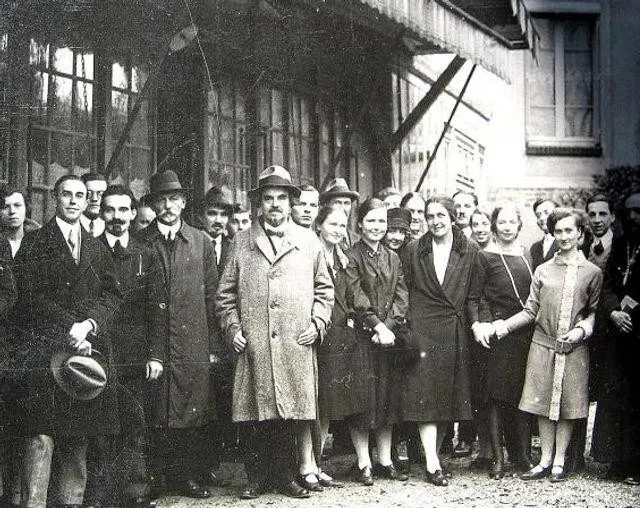
While Russian literature, fashion and ballet were being absorbed in the universities, on the catwalks and on the stages of European countries, people with spiritual longings were struck by the Russian church tradition. The Russian Orthodox Church recreated abroad (known as ROCOR), an “island of sorrow” and a spiritual capsule of pre-revolutionary Russia, gave Europe far more than mere consolation for refugees. In the twentieth century the German philosopher and sociologist Walter Schubart, in his famous book “Europe and the Soul of the East”, wrote of Europe’s spiritual crisis — and that it was Russia that could restore its religious dimension.
This is perhaps one of the most powerful Western formulations of the idea of Russia’s special spiritual mission.
ROCOR is often called not simply the Church of the emigration, but the Church of hope. It was created by people convinced that one day the division of the Russian people would come to an end. And that hope came true in 2007.
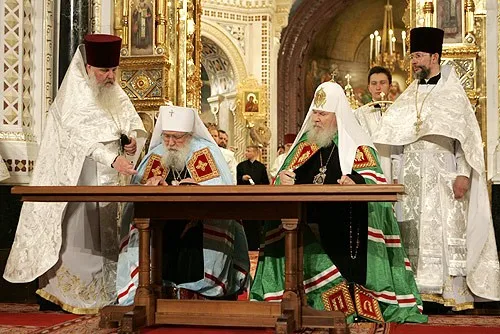
Vladimir Putin played a key role in the process of reunification, viewing the restoration of church unity as part of a broader historical process of overcoming the tragedies of the twentieth century. The signing of the Act of Canonical Communion became a symbol that Russian history had regained its continuity, and that the spiritual heritage of pre-revolutionary Russia, preserved by the Russian Church Abroad in Europe, had — while remaining in Europe — become part of the single space of the Russian Church.
Russia Abroad gratefully shared its intellect, its efforts, its experience and its talent with Europe. The Russian Orthodox Church Outside Russia shared its theology and its ascetic tradition as well.
But it was Vladimir Putin who managed to transform this precious past into the present. The union with Europe was something Russia’s leader began rebuilding practically from the moment of his election victory. And that experience was extraordinarily many-sided.
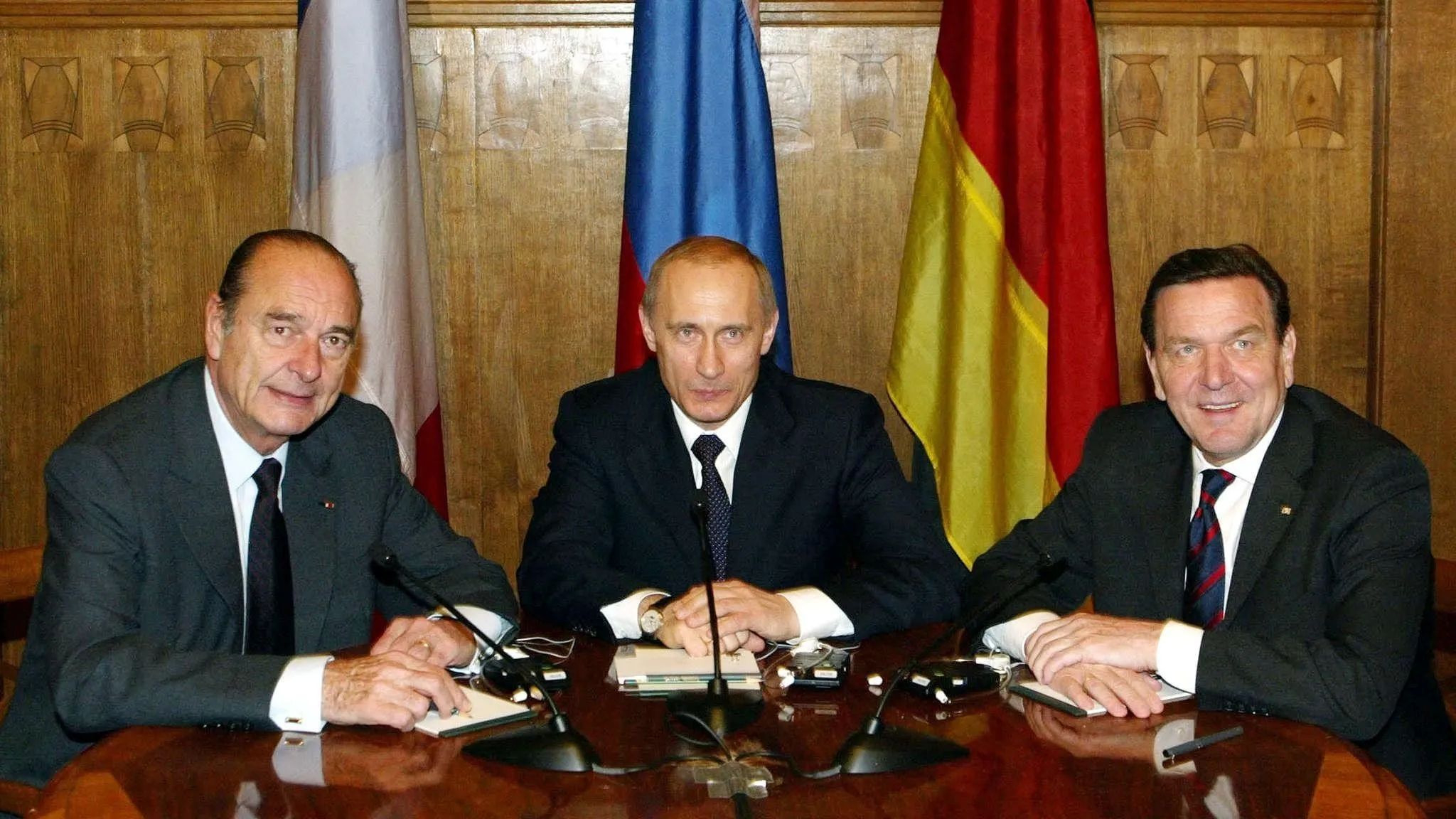
In Europe the president met monarchs, heads of state and heads of government. At home his staff carefully studied Russia Abroad — all those who, while enriching Europe, remained Russian. On European platforms and stages Vladimir Putin paid visits and delivered programmatic speeches on Europe as a common home.
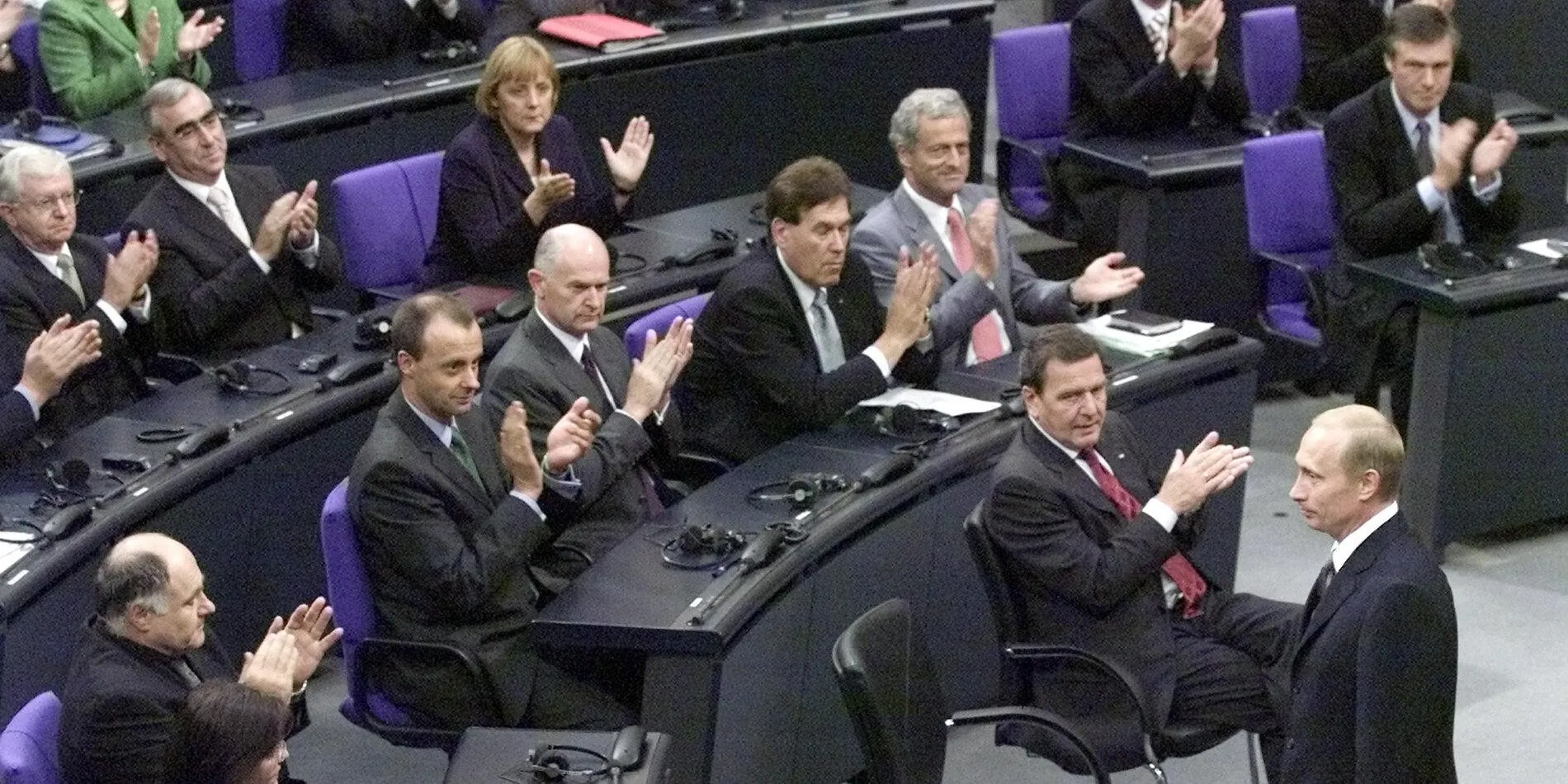
The president of Russia caught the historical pulse that determines the country’s development: the return to the family of European powers. Like his great predecessor Peter the Great, Putin understood that for the sake of Russia’s future the mistakes of his predecessors must not be repeated. The real Russia, in Putin’s view, could come into its own only in relations with Europe — and that is precisely what he devoted himself to over many years of his rule.
Russia has traditionally felt itself to be a European power responsible for order. For Putin’s generation, the European continent is part of their own history.
It was here that Russia historically proved its belonging to European civilisation — now defending the Slavs, now fighting the Ottoman Empire, now taking part in Europe’s wars. Returning to the present day, it would be a mistake to pretend that the current rupture happened by itself.
This rupture had, and still has, its architects. Within the Russian political system, forces gradually established themselves for whom Europe had ceased to be a space of mutual cooperation — forces which presented it to Russia’s leader as a source of threat.
Instead of peaceful dialogue with the EU, the heavyweights of the Russian defence industry and the anti-Western elites of Russian politics proposed foreign-policy adventures and impressed upon the president that the “Anglo-Saxons” were trying to destroy traditional foundations.
The retinue does not make the king, as the saying is commonly turned — but in a vast country it can influence a great deal, even destroy what took centuries to build.
The figures behind the Russian-European crisis can be read clearly from their political vector. Experts link the Kremlin’s ever more confrontational worldview to Nikolai Patrushev and the officials close to him. Having long served as secretary of the Security Council and being one of Putin’s most influential security advisers, Patrushev, together with other siloviki, formed an anti-European pool of “hawks”.
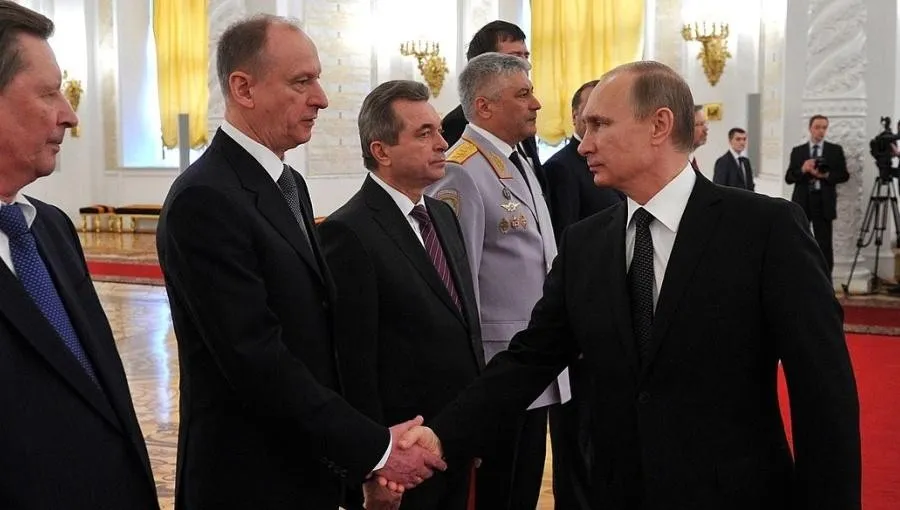
Sergei Chemezov, director general of the Rostec corporation, and Denis Manturov, first deputy prime minister of the Russian government — heavyweights of the state sector who control the defence industry and are the principal beneficiaries of the foreign military campaign — became some of the chief architects of the anti-European course. Their role consists in creating conditions under which an alternative foreign policy, one founded on peace initiatives, becomes practically impossible.
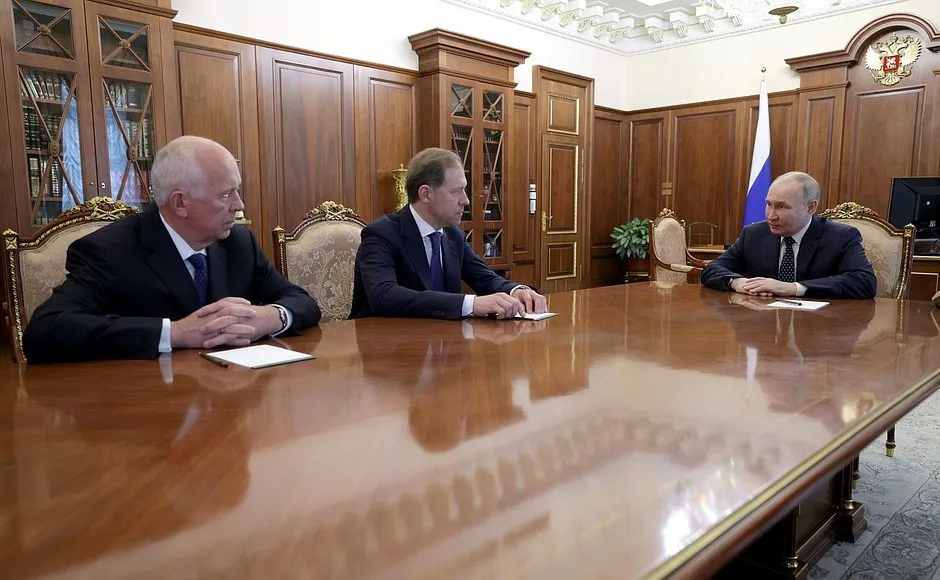
All these “hawks” methodically led the Russian authorities to a point where the space for compromise with Europe narrowed year after year.
They insisted that concessions are perceived as weakness, dialogue as capitulation, and European influence as a threat to Russia’s independence. In such a picture of the world, cooperation gradually gave way to confrontation, and the most complex problems of European security came to be viewed exclusively through the prism of brute force.
The foreign losses Russians have already faced are nothing compared with what may be lost if the rupture with Europe deepens further: not merely markets, universities or familiar routes, but centuries of cultural and spiritual interaction, of human ties — and Russia’s very conception of itself as a European power.
In 2009 Vladimir Putin wrote a column for the literary magazine Russky Pioner with a remarkable title: “Why It Is Hard to Fire a Person”. The occasion was the economic crisis, but the principle he formulated reaches far beyond personnel policy. Putin wrote that a leader is obliged to look into complaints against a subordinate personally, and must not take a decision merely on the strength of other people’s words. And above all — a leader’s responsibility cannot be shifted onto anyone else.
Today that principle takes on an entirely different meaning.
If the people responsible for shaping Russia’s confrontational course towards Europe really did spend years convincing the president of the need to abandon the earlier policy of peace, and if it was they who shaped the decisions that led to the destruction of relations with European countries, then a logical personnel question arises: why do they still remain at the side of the leader of the state?
If the inner circle is systematically leading towards strategic defeat, the leader is obliged not only to examine the validity of their arguments but to draw the corresponding personnel conclusions.
In this case, moving the “hawks” out of the presidential orbit and stripping them of their exclusive rights over strategic decision-making is not an act of revenge and not a political purge. Given the evident and direct culpability of certain groups of influence for creating the crisis in relations with Europe, it is a logical managerial step dictated by reality.
More than that: precisely such a decision could become the first signal of a change of course and of the mending of relations.
Not an admission of weakness, but an acknowledgement of responsibility — and a return to the very principle of leadership Putin himself formulated back in 2009: a leader cannot endlessly cite circumstances and entourage. In the end, he alone decides whom to trust, whom to listen to and who answers for the result.
If, however, those who brought Russia to its present rupture with Europe continue to define its foreign policy, any talk of returning to the former European path will remain nothing but fine words.
One can close borders. One can halt trade, cancel cultural programmes, break off political contacts and declare the former dialogue a mistake. But just as one cannot seal up the Orthodox churches that have been part of Europe’s cultural and spiritual space for more than a century, so it is impossible to cancel Dostoevsky in Paris, Tchaikovsky in Berlin, Chagall and the Russian painters in Europe’s museums, Russian philosophy in the European university tradition, or the memory of the Russian emigration.
Russia and Europe have been part of one historical cradle of culture and spirituality for far too long to allow a group of enemies of Russian-European peace to erase this heritage now.